

Spain Visa for Indians
Spain Visa Information
Visa Type:
Sticker
Visa Type: StickerA visa sticker will be stamped on your passport.
Length of Stay:
90 days
Length of Stay: 90 daysYou can stay for a maximum of 90 days for any 180 day period.
If your visa is valid for less than 90 days, you can only stay upto your visa validity.
Validity:
Short-term
Validity: Short-termA Short term Schengen Visa allows temporary entry into the Schengen Area for tourism.
Entry:
Multiple
Entry: MultipleYou can enter the country more than once during the validity of your visa.
Method:
Visa Appointment
Method: Visa AppointmentApply at your nearby Visa Appointment center.
Spain Visa Rejection Reasons
Factors that can get your visa rejected
Expired Passport
Applying with a passport that has expired or expires within 6 months
Insufficient Funds
Failing to demonstrate enough financial resources to support your stay.
Criminal Record
Having a criminal history that disqualifies you from obtaining a visa.
Previous Visa Violations
Having overstayed or violated the terms of a previous visa.
Invalid or Insufficient Travel Insurance
Failing to present valid or adequate travel insurance
Frequently Asked Questions
Do Indians need a visa for Spain?
Yes, Indian passport holders require a valid visa, specifically a Schengen visa, to enter Spain for short stays including tourism, business engagements, family visits, or other permitted activities for a maximum duration of 90 days days within a 180-day period. Spain does not provide visa-on-arrival or visa-free access for Indian nationals.
Important Information: As Spain is a member of the Schengen Schengen Area, a Spain visa grants facilitated travel within the 29 Schengen countries included in this zone.
How does the Schengen visa look like?
Here is a sample of the Schengen visa:
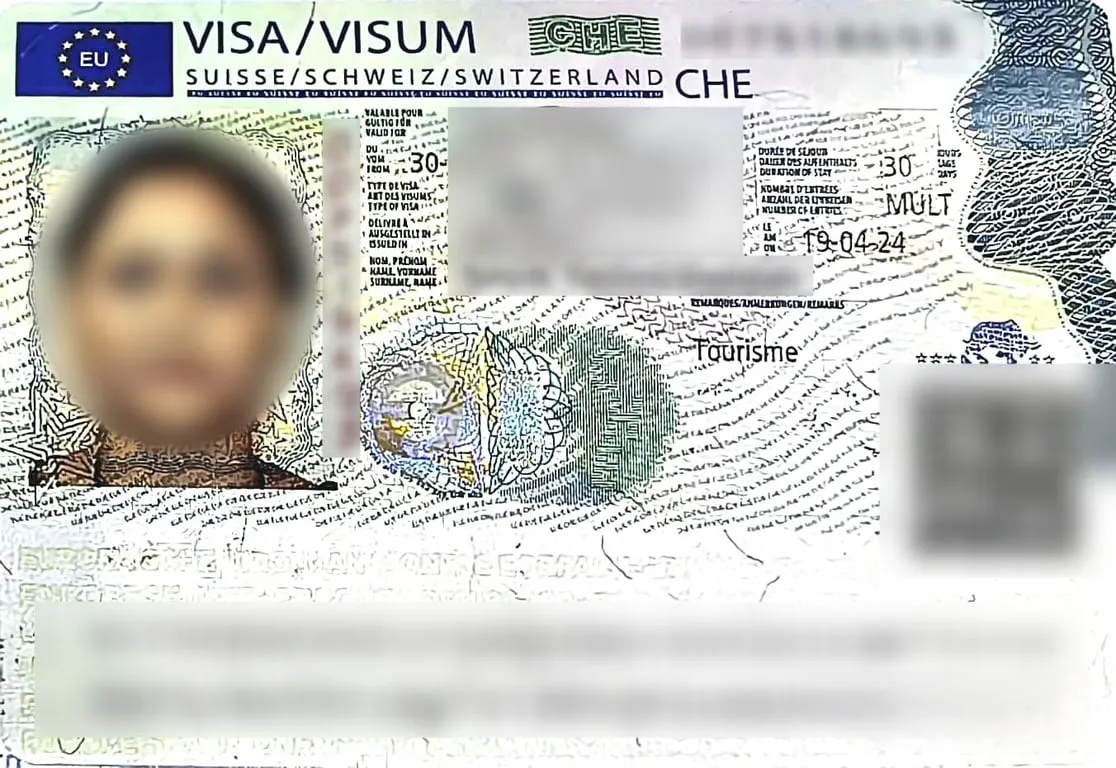
Can I travel to other Schengen Countries with a Spanish tourist visa?
Yes, a Spanish visa grants permission to travel to other Schengen countries without necessitating supplementary visas. The application process requires applicants to explicitly declare their intention to visit multiple Schengen Countries and furnish a comprehensive travel itinerary outlining the entirety of their trip.
The Schengen Area consists of the following 29 European nations: Austria, Belgium, Bulgaria, Croatia, Czech Republic, Denmark, Estonia, Finland, France, Germany, Greece, Hungary, Iceland, Italy, Latvia, Liechtenstein, Lithuania, Luxembourg, Malta, Netherlands, Norway, Poland, Portugal, Romania, Slovakia, Slovenia, Spain, Sweden, and Switzerland.
Can I travel to Spain on a Schengen visa issued by Germany?
Yes, you can enter and travel to Spain with a Schengen visa issued by Germany. However, ideally, you must keep these two rules in mind:
Entry point: You are advised to enter through the country that issued your visa. In this case, Germany should be your primary entry point into the Schengen Area. After that, you can travel to Spain or other Schengen countries.
Main destination for stay: You should spend the majority of your time in Germany, as you are required to apply for a visa from the country where you will spend the most time.
Not meeting the above cases? Worry not! Read our guide on Getting A Schengen Visa From One Country And Travelling To Another? (Essential Tips & Legal Insights) to learn more about navigating these situations smoothly while staying compliant with Schengen regulations.
What is the Spain visa fees for Indians?
The fees for Spanish visas for Indian applicants are as follows: €90 for adults, €45 for children aged 6 to 12 years, and no cost for children under 6 years.
Note: Applicants should bring the precise visa fee amount to their appointment, as payment options may differ based on the visa application centre.
What is the Spain tourist visa validity for Indians?
A Spain tourist visa for Indian applicants is valid for a maximum of 180 days, permitting a stay of up to 90 days during this timeframe.
The visa grants the right to enter Spain and other Schengen nations repeatedly, contingent upon adhering to the 90-day limit within a 180-day interval.
Note: For instance, if entry into Spain occurs on January 1st, the permitted duration of stay is until March 30th, subsequently requiring departure and a wait of 90 days days prior to any subsequent re-entry.
What is the 90/180 rule for Schengen visas?
The 90/180 rule is a guideline dictating how long you can stay within the Schengen Area. It states that you can stay for up to 90 days within any 180-day period in the Schengen Area. These 90 days can be consecutive or spread across multiple trips. However, the cumulative stay within the Schengen Area must not exceed 90 days in any rolling 180-day window.
Understanding the basics:
Rolling period: The 180 days are counted on a rolling basis, meaning each day you are in the Schengen Area, the 180-day period shifts forward by one day. For instance, if you stay from January 1 to March 31, you can return on May 1 but must leave by July 30 (the next 90-day window).
Multiple entries: The rule applies regardless of whether you are on a single-entry or multiple-entry visa. If you leave the Schengen Area and re-enter, the days spent inside are still counted towards your 90-day limit.
Example:
If you enter the Schengen Area on January 1 and stay for 30 days, you have 60 more days to use within the next 150 days.
If you leave and return after 60 days, say on April 1, you can stay for another 60 days, completing your 90 days within that rolling 180-day period.
Tip: Use the online Schengen visa calculators that can help you keep track of your days to ensure compliance with the 90/180 rule.
How far in advance can I apply for a Spain Schengen visa?
Spain visa applications must be submitted no less than 6 months days and no more than 15 days days prior to your intended travel date. Given that visa processing times are subject to fluctuation, applicants are advised to submit their applications 4-6 weeks days before departure to mitigate the risk of unforeseen delays.
What is the difference between a single-entry and a multiple-entry Spain visa?
A single-entry Spain visa allows you to enter Spain (or the Schengen Area) only once. After leaving, you cannot re-enter, even if the visa is still valid.
Multiple-entry visa, on the other hand, allows you to enter and exit the Schengen Area multiple times within the visa’s validity period (as long as you do not exceed the 90-day stay limit within 180 days).
Can I apply for a multiple-entry Schengen visa for Spain?
Yes, you can apply for a multiple-entry Schengen visa for Spain. Multiple-entry visas are typically issued for 1, 3, or 5 years, depending on your travel history and the discretion of the consular officer.
Note: Despite having a multiple-entry visa, you can only stay for a maximum of 90 days within a 180-day period.
What are Spain visa requirements for Indians?
Spain Tourist Visa Requirements for Indian Applicants:
The following documents are typically required for a Spanish tourist visa application:
- A valid passport.
- Completed visa application form.
- Recent passport-sized photograph.
- Evidence of permanent residence.
- Documentation demonstrating the purpose of your travel to Spain.
- Financial statements to prove sufficient funds for your stay.
- Travel itinerary and confirmed flight bookings.
- Proof of accommodation reservations (hotel or rental agreement).
- Valid travel medical insurance policy with adequate coverage.
- Proof of employment or income verification.
Valid Passport Requirements:
Your passport must be valid for a minimum of 3 months days beyond your intended departure date from the Schengen Area. The passport must have been issued within the last 10 years and include at least two empty pages for visa endorsements.
Using VisaFast, you can submit passport photographs alongside a digital image of your passport taken with a smartphone or computer camera.
Visa application form:
Completed, error-free and signed- Spain visa application form.
Photograph Requirements:
A current, passport-sized photograph is required, adhering to Spain’s visa photo specifications as detailed at Spain’s specific visa photo requirements. This includes a plain white background and must be no older than 6 months.
Utilizing VisaFast, applicants can submit their passport-sized photographs or capture a direct image using a smartphone or computer camera. VisaFast’ technology automatically modifies the image to comply with Spanish requirements, simplifying the process.
Proof of Residence:
Applicants are required to submit their Permanent Account Number (PAN).
Proof of travel purpose:
A clear and concise cover letter outlining your personal information, purpose of visit, financial means and intent to return.
VisaFast will help you with a customizable cover letter during the application process, free of cost.
Proof of financial means:
The Spanish government needs proof of your capability to fund your stay. To demonstrate the same, provide bank account statements for the last six months and ITR acknowledgement for the last two years.
Proof of travel:
Provide proof of roundtrip tickets and proof of intra-Schengen flight reservation, train itinerary or car rental if you are travelling to several Schengen States.
VisaFast provides flight reservations for free, allowing you to demonstrate your travel plans without any financial commitment.
Accommodation Verification:
Please provide documentation verifying your intended accommodation for the duration of your stay in Spain. Should you be invited, a notarised invitation letter from the inviting individual, is required.
Utilizing VisaFast’ hotel reservation service is a viable option, offering a demonstration of your travel arrangements without necessitating upfront financial investment.
Travel Insurance Requirements:
Travel insurance is mandatory and must be valid for all Schengen countries. The policy must provide coverage of at least €30,000 or its equivalent, encompassing all risks, for the complete duration of your trip.
Evidence of Employment:
Acceptable documentation includes an employment contract, a letter of no objection from your employer, or a certificate of employment.
Important Note: Additional documents may be necessary based on the details provided within your visa application. For instance, a sponsorship letter is required if your travel is supported by a sponsor.
What documents are required for minors applying for a Spain tourist visa?
Minors seeking a Spain tourist visa are required to submit the following supplementary documentation:
- A certified birth certificate;
- Photocopies of both parents’ or legal guardians’ passports, PAN card, or driving license;
- A travel authorisation form signed by the holder(s) possessing parental authority, accompanied by a copy of their identification document (should the minor be travelling independently of their parents or guardian);
- Evidence of parental authority as may be required.
Note: All submitted documents must be properly notarised, and applicants should retain both original and photocopy versions for presentation during the visa application process.
Can I apply for a Spanish visa without a confirmed flight booking?
Yes, an application for a Schengen visa is possible even without a pre-booked flight. Documentation demonstrating your intended travel dates is required; this can be supplied via a flight itinerary or reservation.
VisaFast offers the provision of verifiable flight reservations at no cost, enabling applicants to substantiate their travel plans without incurring any upfront financial obligations.
Can I apply for a Spanish visa if my accommodation is not confirmed?
Yes, you can apply for a Spain Schengen visa without confirmed accommodation, but you still need to show proof of where you plan to stay. This can include temporary hotel bookings or an invitation letter from friends or family who will be hosting you.
The consulate requires this to ensure that you have arrangements in place for your stay. Even if your plans are not finalized, providing a reservation or written confirmation of your accommodation will satisfy this requirement during the visa application process.
VisaFast provides verifiable hotel reservations for free, allowing you to demonstrate your travel plans without any financial commitment.
Is travel insurance mandatory for a Spain tourist visa?
Yes, travel insurance is required when applying for a Spanish tourist visa. The necessary insurance coverage stipulations include:
A minimum coverage amount of €30,000.00 is mandatory.
The insurance policy must be valid within the geographical area of the Schengen European Union.
It must cover the duration of the applicant’s intended stay or transit within the Schengen Schengen Area.
The travel insurance must encompass all expenses related to repatriation for medical reasons, urgent medical care, emergency hospital treatment, or death occurring during the stay(s) within the Member States.
Verification of recognition by Schengen countries for your insurance provider is essential. The Spanish Ministry of Foreign Affairs provides a list of approved Indian travel insurance companies at approved Indian travel insurance companies.
For multiple-entry visa applications, ensure that your travel insurance adequately covers at least your initial trip.
What are the photo requirements for a Spain visa?
It is required that your photograph adheres to the Spain visa photo requirements detailed below:
- Dimensions: 35 mm x 45 mm (width x height).
- Head Size: The head should constitute 70-80% of the photograph’s area.
- Background: The photograph must be in color and feature a solid white or light grey background.
- Facial Positioning: The applicant’s face must be centered and directed towards the camera with a neutral expression.
- Eye Visibility: Both eyes must be open and unobstructed, without any reflections or overlays.
- Glasses: If wearing glasses, ensure the lenses are free of glare and reflections, and that your eyes are clearly visible. Tinted lenses are not permitted.
- Headwear: Head coverings are prohibited except for religious reasons. When worn, the face must be fully visible from the base of the chin to the top of the forehead, with the edges of the face remaining unobstructed.
Important Note: Strict compliance with these specifications is essential; failure to meet them may result in application delays or rejection.
What is the minimum bank balance required for a Spain tourist visa?
While Spain does not impose a fixed minimum bank balance requirement, applicants are required to demonstrate sufficient funds to cover their intended stay within the Schengen area. A recommended guideline is to present a minimum daily balance of approximately €60-70, which totals approximately €1,800 to €2,100 for a 30-day visit.
Financial stability can be evidenced through the submission of recent bank statements and pay slips. Should you be receiving sponsorship, your sponsor must provide a formal sponsorship letter accompanied by their own financial documentation, confirming their ability to finance your stay.
Note: Maintaining a consistent bank balance over six months prior to application submission is advised. Significant, unexplained fluctuations in account activity may be scrutinized by immigration authorities.
My bank balance fluctuates significantly. What can I do to ensure this doesn’t negatively impact my Spain tourist visa application?
If you experience substantial variations in your bank balance, it is crucial to furnish supplementary information to mitigate potential adverse effects on your visa application.
Address this in the cover letter: When significant deposits or withdrawals occur, include a concise explanation within your cover letter. Specifically, if a large deposit originates from a real estate transaction, clearly state this fact.
Provide supplementary evidence: Submit additional financial documentation, including statements pertaining to fixed deposits, investment funds, or property ownership, to substantiate your overall financial standing.
Can I show multiple sources of income to strengthen my Spain Schengen visa application?
Yes, providing multiple income sources can positively impact your visa application. Acceptable sources include documentation demonstrating income from investments, rental properties, or other legitimate earnings. When a third party is providing sponsorship, their financial records and a formal sponsorship letter must be submitted.
Note: Within your cover letter, detail and explicitly explain each income source to present a thorough assessment of your financial standing.
Are income tax returns mandatory for a Spain tourist visa application?
Yes, submission of income tax returns (ITR) for the preceding two calendar years is required for Spain visa applications. These ITR documents serve to verify financial stability and consistent income, elements considered essential for demonstrating the applicant’s capacity to cover expenses sustained while residing in Spain.
What should I do if I haven’t filed income tax returns for the past two years?
If you have not submitted income tax returns (ITRs) for the preceding two fiscal years, this could potentially impact your visa application. To mitigate this, you should consider the following actions:
Prepare a detailed explanation: Submit a letter outlining the reasons for the absence of ITR filings. Acceptable justifications may encompass recent employment, income falling below the taxable limit, or status as a dependent.
Present supplementary financial evidence: Include supporting documentation demonstrating your income and financial standing, such as bank statements, salary slips, or investment records.
Submit sponsor’s ITR: Should a sponsor be supporting your trip, furnish their ITRs alongside a sponsorship letter to substantiate the application.
I am a housewife with no independent income. What documents can I submit to get my Spain visa approved?
As a homemaker without independent income, you must submit the following documentation to facilitate your Spain visa application:
Sponsorship Declaration: A sponsorship declaration from your spouse or a close family member, outlining the nature of your relationship and their assurance of financial support for your travel expenses.
Sponsor’s Financial Records: Submit copies of your sponsor’s bank statements, income tax returns, and salary documentation to demonstrate their financial capacity.
Evidence of Relationship: Provide a certified copy of the relevant document – such as a marriage certificate – verifying your familial connection to the sponsor.
Joint Asset Verification: If applicable, present documentation detailing jointly held property or bank accounts, serving as evidence of shared financial resources.
How can a businessman succeed in obtaining a Spain tourist visa?
To strengthen your Spain business visa application, applicants should present evidence of financial stability and clearly articulate the objective of their business trip. Specifically, the following documentation is required:
Business Financial Records: Submit comprehensive financial statements for your business, comprising profit and loss accounts, balance sheets, and bank statements, with a minimum six-month period of coverage.
Company Documentation: Provide authenticated copies of your business registration documents, including your Goods and Services Tax (GST) certificate, Company PAN card, and incorporation certificate.
Business Tax Returns: Include your business’s income tax returns for the preceding two years to substantiate financial health and operational stability.
Business Invitation: For business-related travel, a formal invitation letter from your Spanish business counterpart or the visiting organization is necessary. This letter must detail the purpose and anticipated duration of your stay.
Note: In your accompanying cover letter, explicitly connect your business operations to the reason for your visit to ensure the legitimacy of your travel intentions.
Can I apply for a Spanish Schengen visa if I am unemployed?
Yes, a Spanish visa is obtainable despite being unemployed.
Nonetheless, alongside standard bank statements and Income Tax Returns (ITRs), supplementary documentation is required to substantiate your financial capacity to cover expenses during your visit. This may encompass:
Evidence of passive income: Submit records detailing consistent income derived from passive sources, including rental agreements, dividend statements, or investment interest income.
Assets or investment documentation: Where relevant, furnish documentation confirming ownership of assets generating passive income, such as property titles or investment certificates.
How can a retired individual succeed in applying for a Spain tourist visa?
To successfully obtain a Spain visa if you are retired, you must demonstrate sufficient financial resources and a well-defined reason for your visit. The following documentation is typically required:
“Provide your pension statements for the past six months as proof of a steady income stream.”
Pension Documentation: Submit comprehensive pension statements covering the preceding six months, serving as evidence of a consistent and reliable income source.
Bank Statements: Submit detailed bank statements reflecting a demonstrable and stable pension credit history and adequate financial reserves.
Proof of Financial Assets: Include documentation verifying savings or investments, such as fixed deposit accounts, mutual fund holdings, or property ownership records, demonstrating your overall financial stability.
Retirement Verification: Present a certified copy of your retirement certificate or a formal letter from your former employer explicitly confirming your retirement status.
Travel Plans and Accommodation Details: Present a clearly articulated travel itinerary and documented accommodation arrangements pertaining to your intended stay in Spain.
Sponsorship Documentation: If a family member is providing sponsorship for your trip, submit a formal sponsorship letter alongside evidence of their financial capacity to support your duration of stay.
How can I show strong ties to India when applying for a Spain tourist visa?
To strengthen your application for a visa, demonstrating established connections to India is crucial. This can be achieved through the submission of the following documentation:
Employment Verification: For those currently employed, a formal letter from your employer is required, detailing your job title, salary, and approved leave duration. The letter should explicitly state that your position will remain available upon your return.
Property Holdings: Submit documentation substantiating property ownership in India, encompassing assets such as residential property or land. This requirement extends to all applicants, including retirees, homemakers, and individuals not currently employed, as documented property ownership serves as a demonstrable indication of residency.
Family Relationships: Evidence of family connections can be provided through the presentation of marriage certificates or birth certificates pertaining to dependent children. This documentation is particularly pertinent for applicants who are homemakers or unemployed, as it underscores familial responsibilities and reinforces the intention to return to India.
Academic Commitments: Students should furnish a letter from their educational institution confirming enrollment status and the anticipated date of return to continue their studies.
How can I prove the purpose of my trip when applying for a Spain visa?
You can prove the purpose of your trip by providing the following documents:
Tourism: Hotel reservations, a detailed travel itinerary, and return flight tickets.
Business: An invitation letter from a company or business partner in the Schengen Area, along with details of meetings or conferences you plan to attend.
Family visit: An invitation letter from your host in the Schengen Country, along with their proof of residence and relationship to you.
Tip: Be as specific as possible in your cover letter, detailing the activities and plans during your stay to strengthen your application.
Do I need a cover letter for my Spain visa? What should I include?
Yes, a cover letter is generally required when submitting a Spain visa application. The letter should comprehensively detail the following:
Personal Data: This includes your full name, residential address, and the number associated with your passport.
Justification for Travel: A thorough explanation of the reason for your visit, specifying whether it is for tourism, business purposes, or a family visit.
Proposed Travel Schedule: Clearly outline your intended travel dates, along with details regarding your accommodation arrangements and planned destinations.
Demonstration of Financial Capacity: Provide evidence of your ability to finance your trip, accompanied by relevant supporting documentation.
Return Intent Statement: Articulate your reasons for returning to your country of residence, establishing your intention to depart Spain following the completion of your visit.
VisaFast offers a tailored cover letter as part of its application support service, provided without charge.
I’ll be staying with a friend in Spain. Do I need an invitation letter?
Yes, when residing with a friend or family member in the Schengen Area, an invitation letter is required. This letter must generally encompass the following details:
Inviter’s Details: The letter must state the inviter’s full name, current address, and a photocopy of their passport or residency authorization.
Accommodation Confirmation: It should clearly confirm that the inviter will provide accommodation for your duration of stay.
Relationship Declaration: A concise description of the relationship between you and the host, along with a statement outlining the reason for your visit.
What should I do if my passport is set to expire soon, but I need to apply for a Spain visa?
To apply for a Spain visa, your passport must be valid for a minimum of three months beyond your intended departure date from the Schengen Area. It is recommended to renew your passport prior to application to ensure compliance with visa requirements.
What if I only have one empty page left in my passport, but my passport has not expired?
If your passport contains only one unused page, it may be sufficient for visa issuance. Nevertheless, destination immigration officials may mandate additional blank spaces for entry and exit stamp application.
It is recommended to renew your passport if you possess limited available blank pages. An Indian passport renewal utilizing the ‘Tatkal’ (express) service generally requires approximately 3 days.
Can I apply for a Spain visa if I have overstayed on a previous visa?
Yes, an application for a Spain visa is possible despite a prior overstay; however, applicants must thoroughly detail the reasons for the overstay and furnish evidence demonstrating its unintentional or unavoidable nature.
A transparent and truthful account, accompanied by relevant documentation (including medical records if the overstay resulted from health concerns), may assist in reducing the adverse consequences associated with a prior overstay.
How do I get a multiple-entry Spain Schengen visa?
To obtain a multiple-entry Spain Schengen visa, particularly under the new rules favourable for Indian citizens, follow these steps:
Establish a travel history: First, obtain and lawfully use two Schengen visas within the previous three years.
Apply for a multiple-entry visa: After meeting the above condition, apply for a multiple-entry visa, which can be valid for up to two years initially. If you use this visa correctly, you can then apply for a five-year multiple-entry visa.
Ensure passport validity: Ensure your passport has sufficient validity to cover the entire duration of the multiple-entry visa you seek.
Provide strong justifications: Your application should include reasons for needing multiple entries, such as frequent business trips, family visits, or ongoing travel requirements.
Use the Cascade Regime: The Visa Code Regulation (EC) No 810/2009 governs the issuance of Schengen visas. Under the EU’s “cascade” regime, Indian nationals can progress from a two-year visa to a five-year visa, enjoying travel rights similar to visa-free nationals if all conditions are met.
For more detailed guidance, visit the European External Action Service.
How to apply for a Spain visa from India?
Applying for a Spain Tourist Visa from India – A Step-by-Step Guide:
Required Documentation: Collect all necessary documents as specified by the Spanish consulate.
Online Application via VisaFast: Initiate your application process through the VisaFast platform.
Schedule a Visa Appointment: Book your appointment at a designated visa application center.
Document Submission at the Center: Present your completed application and supporting documents at the appointment center.
Payment of Fees: Pay the VisaFast service fee and any applicable visa fees.
Visa Issuance: Upon successful completion of the process, your visa will be issued.
Gather Your Documents:
Start by collecting all the required documents, such as your valid passport, the last three months’ bank statements, payslips, income tax returns, and any other documents listed in the requirements.
Accessing VisaFast:
To proceed, applicants should access the VisaFast platform via the company’s website or mobile application. When accessing the platform, select “Spain” as the intended destination.
Schedule Your Appointment:
Provide the required information, submit supporting documentation, and remit the applicable appointment fee. Upon completion of this process, you will receive a confirmation notification regarding your visa appointment scheduling.
Required Document Submission:
Please proceed to the designated visa application center as per your scheduled appointment. VisaFast will facilitate the submission of your documents in the specified sequence. Your visit will include the completion of mandatory biometric data capture, encompassing fingerprinting and facial scanning procedures.
Payment of VisaFast Fee and Service Charges:
Please remit the VisaFast Fee and allow for processing to be finalized, encompassing the acquisition of travel insurance and associated courier charges.
Visa Delivery:
Upon approval, your passport incorporating a Spain tourist visa stamp will be dispatched directly to your specified address.
Note: It is advisable to initiate the visa application process with a lead time of at least 6-8 weeks months prior to your intended travel dates, to accommodate processing timelines and potential delays.
Do I need to submit my passport for Spain tourist visa processing?
Yes, submission of your passport is necessary for the processing of your Spain visa application. The passport serves as documentation for identity confirmation, to facilitate verification of your travel background, and for the application of the visa endorsement should your application be successful.
Is an interview mandatory when applying for a Spain-Schengen visa?
No, a consular interview is typically not mandatory for getting a visa to Spain.
However, in special circumstances, such as when there are discrepancies in your application or if the visa officer deems it necessary for further assessment, an interview may be requested.
What happens at the Spanish visa appointment?
On the day of your Spain visa appointment, the following steps will be taken:
Document Presentation: You will present all necessary documents, including your passport, completed application form, and passport-sized photograph.
Formalities: You must complete and sign the application form, remit payment of the Spain visa fee, and retain a copy of the payment receipt for your reference.
Biometric Capture: Biometric data, consisting of fingerprints and a digital photograph, will be collected unless this information was previously submitted within the timeframe specified as 59 months.
Important: It is recommended that you meticulously organize all required documents prior to your appointment to minimize potential processing delays.
What can I do to ensure my Spain visa application is approved?
To enhance your prospects for a successful Spain visa application, consider the following key points:
Accurate and Comprehensive Documentation: It is crucial to submit all necessary documents, verifying that they are accurate, complete, and conform to established requirements. Discrepancies or inaccurate information may result in immediate visa denial.
Defined Travel Purpose: Unclear details regarding your intended travel purpose, itinerary, or reasons for visiting can lead to rejection. You must furnish a credible and well-defined travel plan that consistently reflects your stated purpose of visit.
Demonstrable Financial Capacity: You must clearly present evidence of sufficient funds to cover your intended stay in Spain and potentially other Schengen states, should you plan to visit.
Mandatory Travel Insurance Coverage: Obtain travel insurance that fully satisfies the required coverage stipulations.
Established Ties to India: Failure to demonstrate robust ties to India may raise concerns regarding potential overstay. Provide compelling documentation, such as an employment verification letter, property ownership records, or demonstrable family connections, to assure the authorities of your intention to return to India.
Will the Spain visa fee be refunded if my visa application is rejected?
No, the cost of a Spain Schengen visa is considered non-recoverable in the event of a denied application.
What is the visa rejection rate for Indian citizens applying for a Spain Schengen visa?
The Spain visa rejection percentage for Indian citizens at the consulate has shown an improvement, moving from 18.8% in 2022 to 14.8% in 2023.
This positive trend persists alongside a consistent increase in the number of applicants over recent years. Data from the pre-COVID 2019 year reveals that 74,028 Indians applied for a Spanish visa, which subsequently increased to 80,098 in 2022 and 91,863 in 2023. Despite this rise in applications, the declining rejection rate suggests a greater likelihood of success for Indian applicants.
Nevertheless, a rejection rate of 14.8% signifies that approximately one in seven applications is still being denied. Consequently, when applying for a Spain visa, meticulous attention to detail and the provision of accurate and legitimate documentation are crucial. Should you have any uncertainties or require assistance navigating the visa application process, seeking guidance from qualified visa professionals is advisable to mitigate potential delays and associated costs.
Note: For a more thorough examination of frequently cited reasons for visa denials and strategies for avoidance, consult our detailed blog post on common Schengen visa rejection factors.
What can I do if my Spain visa application is rejected?
If your Spain tourist visa application is denied, you have two courses of action:
Reapplication: You may reapply following the rectification of the grounds for rejection, confirming the completeness and accuracy of all submitted documents.
Lodging an Appeal: Alternatively, you can initiate an appeal within one month of the rejection date. This involves compiling any deficient documents or information and composing a formal appeal letter articulating the rationale for visa issuance.
For comprehensive information regarding the visa reapplication and appeal process, please refer to our complete guide at Schengen.
How do I appeal a Spanish visa rejection?
If your Spanish Schengen visa application is denied, you retain the right to formally challenge the decision within one month of receiving the notification of refusal. The following outlines the process:
Review the Refusal Notice: Carefully examine the rejection letter to identify the precise grounds cited for the denial.
Prepare an Appeal Letter: Compose a formal appeal letter directly responding to the stated reasons for refusal. Clearly articulate your argument for reconsideration, presenting any supplementary documentation and requesting a thorough review of your application.
File the Appeal: Submit the appeal letter, along with all supporting documentation, to the consulate responsible for issuing the initial refusal notice, adhering to the stipulated timeframe.
Essential Components of the Appeal Letter:
- Your complete personal particulars, including name and passport details;
- Comprehensive information pertaining to your visa application, specifying the visa type and purpose of travel;
- The date and reference number associated with the original rejection notification;
- A detailed response addressing each individual reason outlined in the refusal letter;
- Any additional evidence or supporting materials designed to bolster your case;
- A courteous request for a renewed assessment of your application.
Note: In numerous situations, a direct reapplication for the visa may prove more efficient than pursuing an appeal. This approach can often yield a faster resolution and potentially improve your chances of success, particularly when accompanied by updated or rectified information within your revised application.
What is the Spain visa processing time for Indians?
Spain visa processing times for Indian applicants generally require 15 business days following the submission of a complete application.
Delays are possible, potentially extending the total processing duration to 45 calendar days, should supplementary documentation or an interview be necessitated.
Can I work on a Spain tourist visa?
No, holding a Spanish tourist visa does not authorize any employment activities, including remote work. Utilizing a tourist visa for work violates its intended purpose of short-term visits for leisure or tourism. Engaging in employment while on this visa may result in significant consequences, such as fines, deportation proceedings, and a permanent restriction from obtaining future visas.
What happens if I lose my passport with a Spanish visa while travelling?
If you experience the loss of your Spanish visa-related passport during international travel, it is imperative to immediately file a report with the relevant local law enforcement authorities and secure an official police record. Subsequently, you must present yourself at the nearest Indian embassy or consulate to initiate the process of obtaining an emergency passport. Furthermore, you may seek information regarding the potential for a visa reissue, subject to applicable regulations.
What should I do if my Spain visa is approved but I need to change my travel dates?
If a Spain visa has been approved, continued use is permitted provided the revised travel dates remain within the visa’s expiration date. Should the proposed travel dates extend beyond the visa’s validity, a new visa application will be required.
Can I bring prescription medication into Spain on a Schengen visa?
Yes, individuals holding a Schengen visa may be permitted to bring prescription medication into Spain. It is necessary to provide documentation, including an official letter from a healthcare provider, detailing your name, the specific medication, dosage, intended use, and prescribed quantity.
Can I bring my pet to Spain with a Schengen visa?
Yes, it is possible to travel to Spain with a pet utilizing a Schengen visa; however, your animal companion must fulfill particular stipulations prior to entry:
Microchip Implantation: Your pet must possess an ISO 11784/11785 compliant microchip containing a 15-digit identification number.
Rabies Vaccination: A valid rabies vaccination is mandatory for your pet, and this vaccination must be administered at least 21 days days prior to your arrival in Spain.
Veterinary Health Certificate: When entering Spain from a country outside the European Union, a veterinary health certificate issued by an official veterinarian in the originating country is required.
Fecal Examination: Dogs traveling from countries outside the European Union must undergo fecal examination 24-120 hours before entry into Spain.
Note: It is crucial to verify the most current pet import regulations for Spain and the Schengen region prior to your travel to confirm full adherence to all applicable requirements.
What should I do if I need to extend my stay in Spain for medical reasons?
To request a visa extension in Spain due to medical reasons, an application must be submitted to the appropriate local immigration office in Spain. Supporting documentation will be required, including:
Medical Certificate: A certification issued by a qualified Spanish medical practitioner detailing the necessity of the extended stay due to medical circumstances.
Travel Insurance Documentation: Evidence demonstrating that your existing travel insurance policy provides coverage for the requested extension period.
Financial Evidence: Documentation confirming sufficient financial resources to cover your expenses throughout the proposed extended stay.
Important: Applications for visa extensions must be submitted prior to the expiration of the current visa. All submitted documents should be comprehensive and clearly demonstrate the justification for the extension.
What happens if I overstay my Spanish Schengen visa?
You are obligated to comply with visa regulations. Exceeding the permitted 90-day stay can result in significant repercussions, including:
Monetary Penalties and Removal: Failure to adhere to the stipulated timeframe may result in the imposition of fines covering the duration of the overstay, potentially leading to your deportation from Spain.
Permanent Travel Restriction: Based on the length of the overstay, you may face a permanent ban from re-entering Spain or other Schengen countries, lasting for multiple years.
Legal Ramifications: Serious overstays can trigger legal proceedings against you.
Impeded Future Visa Applications: An overstayed visa can substantially diminish your prospects for securing future visas, impacting applications to Spain and potentially other Schengen nations.