

Italy Visa for Indians
Italy Visa Information
Visa Type:
Sticker
Visa Type: StickerA visa sticker will be stamped on your passport.
Length of Stay:
90 days
Length of Stay: 90 daysYou can stay for a maximum of 90 days for any 180 day period.
If your visa is valid for less than 90 days, you can only stay upto your visa validity.
Validity:
Short-term
Validity: Short-termA Short term Schengen Visa allows temporary entry into the Schengen Area for tourism.
Entry:
Multiple
Entry: MultipleYou can enter the country more than once during the validity of your visa.
Method:
Visa Appointment
Method: Visa AppointmentApply at your nearby Visa Appointment center.
Italy Visa Rejection Reasons
Factors that can get your visa rejected
Expired Passport
Applying with a passport that has expired or expires within 6 months
Insufficient Funds
Failing to demonstrate enough financial resources to support your stay.
Criminal Record
Having a criminal history that disqualifies you from obtaining a visa.
Previous Visa Violations
Having overstayed or violated the terms of a previous visa.
Invalid or Insufficient Travel Insurance
Failing to present valid or adequate travel insurance
Frequently Asked Questions
Do Indians need a visa for Italy?
Yes, Indian passport holders require a valid visa, namely a Schengen visa, to enter Italy for short-term visits including tourism, business, family connections, or other permitted activities permitted for a maximum duration of 90 days days within a 180-day period. Italy does not provide visa-on-arrival or visa-free access for Indian nationals.
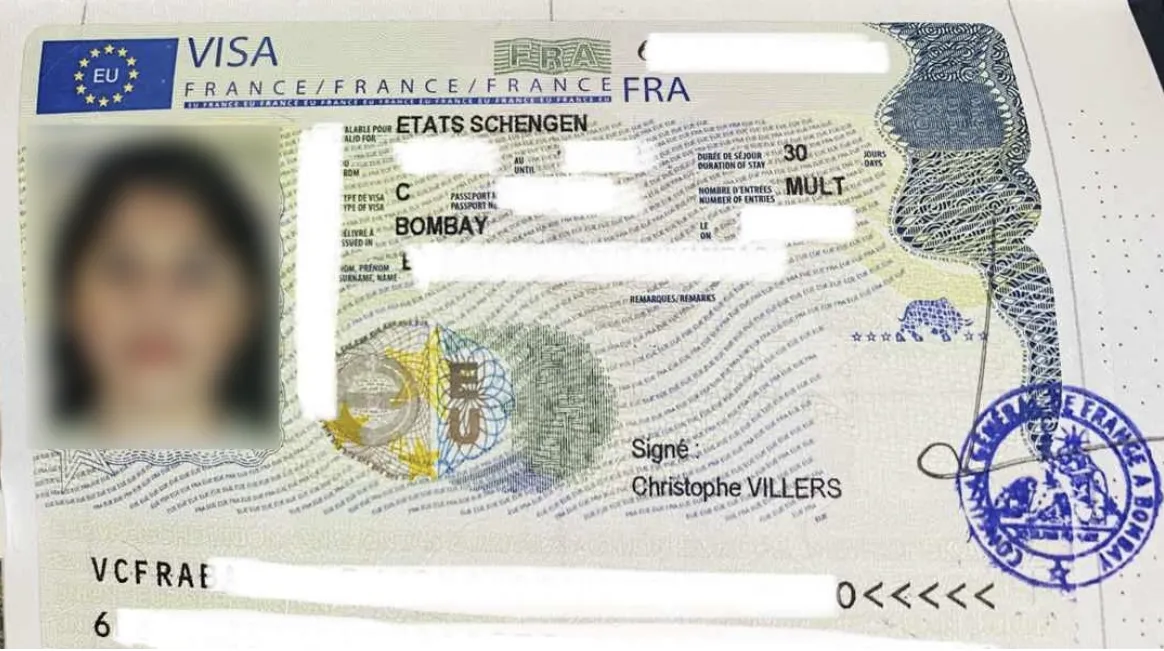
What does a Schengen visa look like?
Here is a sample of the Schengen visa:
What is the 90/180-day Schengen rule?
The 90/180 rule is a key guideline for travellers with a Schengen visa, determining how long you can stay within the Schengen Area. It states that you can remain in the Schengen Zone for up to 90 days within any 180-day period. These 90 days can be used consecutively or spread across multiple trips, but your total stay cannot exceed 90 days within any rolling 180-day timeframe.
Here’s how it works:
Day counting: Start counting your days from the first day you enter a Schengen country. Each day you spend in the Schengen Area counts toward your 90-day limit.
180 Days: The 180 days are like a rolling window. It keeps moving forward as you move forward in time. So, whenever you want to enter a Schengen country, you must look back over the last 180 days. If you’ve stayed 90 days already within that period, you have to wait until some of those days “fall out” of the 180-day window before entering again.
Stay within the 90-day limit: You can use your 90 days all at once or spread them out with shorter visits. Just make sure that when you add up all the days you’ve spent in the Schengen Area during any 180-day period, it doesn’t exceed 90 days.
Example:
If you go to Italy on January 1st and stay for 30 days, then leave and come back on March 1st for another 30 days, you’ve used up 60 of your 90 days. If you want to visit again in May, you can only stay for 30 more days before reaching your 90-day limit within that 180-day window.
How can I obtain a multi-entry Italy visa?
To obtain a multiple-entry Italy Schengen visa, especially under the new regulations favourable to Indians, follow these steps:
Build a travel history: Obtain and properly use two Schengen visas within the last three years.
Apply for multiple-entry: Once you’ve met the travel history requirement, apply for a multiple-entry visa. This visa may initially be valid for up to two years. Proper use of this visa can lead to eligibility for a five-year multiple-entry visa.
Check passport validity: Ensure your passport is valid to cover the entire duration of the multiple-entry visa you are applying for.
Provide justifications: Your application should clearly outline the need for multiple entries, such as frequent business travel, family visits, or other ongoing travel needs.
Utilise the cascade regime: Under the EU’s “cascade” regime, Indian nationals can progress from a two-year visa to a five-year visa, gaining travel privileges similar to those of visa-free nationals if all conditions are met.
Understand EU regulations: The Visa Code Regulation (EC) No 810/2009 governs Schengen visas. The new “cascade” system facilitates easier access to long-term visas for Indian nationals with an established travel record.
What is the Italy tourist visa validity for Indians?
An Italy tourist visa for Indian applicants is typically issued for a maximum duration of 180 days. This allows for a stay of up to 90 days days within that timeframe.
Note: The visa’s term of validity permits entry into Italy and other Schengen Schengen Area countries, enabling multiple visits. However, each stay must not exceed the 90-day limit within a 180-day window.
Consider this scenario: Should you arrive in Italy on January 1st, your permitted stay can extend until March 30th. Following this date, you must depart Italy and await at least 90 days days before attempting to re-enter the Schengen Zone.
What is the Italy visa fees for Indians?
The Italy visa fees for Indians are, for Adults: €90, for Children (6-12 years): €45, and for Children under 6 years: Free of cost.
What is the Italy visa processing time for Indians?
The processing time for Italian visas for Indian applicants generally amounts to 15 business days following the acceptance of a fully submitted application.
Nevertheless, this duration can be influenced by factors such as the need for an interview, requests for supplementary documentation, or elevated application volumes experienced during periods of high travel demand.
Note: To facilitate timely visa processing, it is advisable to submit your application with sufficient lead time, particularly when traveling during peak travel seasons. 6 weeks
How to check available appointment dates for an Italy visa for Indians?
The VisaFast Schengen visa appointment tracker allows you to check the available appointment dates for the Italy Schengen visa easily without logging in.
What are the Italy visa requirements for Indian citizens?
Here are the Italy tourist visa requirements for Indians:
Visa application form
Passport photo
Valid passport
Return flight ticket
Proof of accommodation
Cover letter
Schengen travel insurance
Proof of financial means
Proof of current social and professional status
Visa application form:
Complete and error-free Italy visa application form.
Passport Photo Specifications:
Applicants are required to submit a passport photo conforming to the specifications detailed in the Italy visa photo requirements.
Utilizing services such as VisaFast allows for the submission of a passport-sized photograph, and additionally, the ability to capture a photograph using a smartphone or computer camera. VisaFast automatically modifies the image to align with Italian visa regulations, simplifying the process.
Valid Passport Required:
Applicants must present a passport that is valid for a minimum of three months beyond the intended date of departure from the Schengen Area. The passport must have been issued within the preceding ten years and must include a minimum of two available (blank) pages.
Utilizing the VisaFast platform allows for the submission of passport photographs, as well as the digitization of your passport using a smartphone or computer camera.
Return Travel Documentation:
You must submit a confirmed return or onward flight itinerary demonstrating your intention to depart Italy prior to the expiration of your visa.
VisaFast offers complimentary flight bookings, enabling you to substantiate your travel plans without incurring any associated costs.
Proof of Accommodation:
Acceptable evidence includes a hotel booking confirmation, a lease agreement, or a formal letter of invitation from a resident in Italy. VisaFast offers complimentary hotel reservations as a method to showcase travel intentions, eliminating upfront financial obligations.
Letter of Intent:
This letter outlines the purpose of your travel, details your planned itinerary, and confirms your commitment to returning to India upon completion of your visit.
VisaFast offers travel insurance solutions designed to satisfy Schengen visa stipulations while maintaining competitive pricing.
Schengen Travel Insurance Requirements:
Applicants must secure travel insurance providing a minimum coverage amount of €30,000, ensuring validity for the complete duration of the intended stay within the Schengen Area.
Proof of financial means**:**
The government needs proof of your capability to fund your stay, such as the bank account statements for the last three months and ITR acknowledgement for the last two years. The bank statements should be signed and stamped by your bank.
Proof of current social and professional status:
This can be an employment contract, leave approval letter from the employer or certificate of employment. To prove social ties, you can submit any other document demonstrating your personal links to the country of residence (e.g., a copy of the marriage certificate or family record book).
Note: Depending on the specific circumstances mentioned in the visa application, additional documents will be required. For example, you will need a sponsorship letter if your trip is sponsored.
Is travel insurance mandatory for Indians applying for an Italian tourist visa?
Yes, travel insurance is required when applying for an Italian tourist visa. Specifically, the travel insurance policy must fulfill the following stipulations:
The minimum coverage amount is €30,000.00.
The insurance policy must be valid across the entirety of the Schengen European Union.
It must cover the complete duration of the applicant’s intended stay or transit within the Schengen Schengen Area.
The policy should encompass expenses related to repatriation for medical reasons, urgent medical attention, emergency hospital treatment, or death during the stay(s) within the Member States.
Note: Verify that your insurance provider is recognised in the Schengen countries. A list of approved Indian travel insurance companies can be found at approved Indian travel insurance companies on the government website.
VisaFast offers travel insurance solutions that satisfy Schengen Italian visa criteria at a competitive price.
What is the minimum bank balance required when applying for an Italy visa?
For an Italian tourist visa, you must demonstrate that you have sufficient funds to cover your stay in the Schengen Area. Based on the Italian subsistence table, here are the minimum funds you require for an Italian visa:
For stays of 1 to 5 days: A fixed amount of €269.60 is required, which is reduced to €212.81 if you travel with others.
For stays of 6 to 10 days: You need a daily amount of €44.93 or €26.33 per person if travelling with others.
For stays of 11 to 20 days: You need a fixed amount of €51.64 plus a daily amount of €36.67. If travelling with others, the fixed amount is reduced to €25.82 and the daily amount to €22.21 per person.
For stays longer than 20 days: You require a fixed amount of €206.58 and a daily amount of €27.89. If travelling with others, this is reduced to a fixed amount of €118.79 and a daily amount of €17.04 per person.
To show that you have enough funds, you can submit the following:
Bank statements: Provide signed and stamped bank statements from the last 3 months. You can request these from your bank in person or, if available, via online banking for stamped digital copies. Ensure the statements clearly reflect your financial stability and ability to cover your travel expenses.
Investments and mutual funds: If you have mutual funds, fixed deposits, or other investments, submit official statements from your financial institution. These documents should detail the current value of your assets and be signed and stamped by the issuing institution.
What type of financial proof is required when applying for an Italy tourist visa?
To substantiate your ability to cover your expenses while in Italy, you will be required to submit the following financial documentation:
Bank Statements: Please provide original bank statements covering the preceding three months. These statements must reflect regular income, including salary deposits, and display a sufficient account balance.
Income Tax Returns (ITR): To verify your financial standing, submissions of your ITR filings for the last two years are necessary.
Salary Slips: For employed applicants, include salary slips generated over the past three to six months.
Evidence of Investments: Supplemental financial evidence, such as details regarding fixed deposits, mutual fund holdings, or property investments, may be submitted as additional support.
Note: To bolster your application, ensure your bank statements demonstrate consistent financial activity and avoid significant, unexplained deposits or withdrawals in the period leading up to your application submission.
What should I do if my passport is about to expire and I need to apply for an Italian tourist visa?
Important Note: To be eligible for an Italian visa, your passport must demonstrate current validity. Specifically, it must be valid for a minimum of three months beyond your intended stay in the Schengen Area. Therefore, applicants are advised to renew their passports prior to submitting a visa application to mitigate potential processing delays.
Guidance: Applicants should verify that their passport contains sufficient blank pages – at least two – to accommodate the visa and required entry/exit stamps. Proactive passport renewal is strongly encouraged to prevent potential issues during the visa application process.
Can I apply for a Italy Schengen visa if my accommodation is not confirmed?
Yes, an application for a Schengen visa is possible notwithstanding the lack of finalized accommodation arrangements at the time of submission. Applicants are required to furnish evidence demonstrating that temporary lodging solutions have been secured. Acceptable forms of evidence encompass hotel bookings or a letter of invitation from acquaintances or relatives, outlining intended short-term residence. These documents establish that proactive measures have been undertaken to ensure suitable accommodation, a key requirement for visa consideration.
Note: Given potentially uncertain accommodation plans, securing a hotel reservation with a readily cancellable policy is advisable. This provides flexibility in adjusting bookings post-visa approval.
VisaFast offers certified hotel reservations at no charge, facilitating the presentation of validated travel plans without incurring upfront financial obligations.
How can I show strong ties to India when applying for an Italian tourist visa?
When applying for an Italian visa, applicants must establish compelling evidence of strong ties to India to assure the consular officer of their intention to return to India following their visit. The following documents are typically required to support an application:
Employment Verification: Individuals employed should submit a formal letter from their employer detailing their job title, salary, and confirmation of approved leave, explicitly stating that their employment will be maintained upon their return.
Property Ownership: Submission of documentation verifying ownership of real estate or property within India, such as residential property or land, serves as evidence of significant investment and strengthens the applicant’s connection to the country.
Family Ties: Providing supporting documentation regarding family circumstances, including marriage or birth certificates pertaining to dependent children, demonstrates existing familial responsibilities within India.
Educational Commitments: Students should present a letter from their educational institution verifying their enrollment status and anticipated return date to continue their studies.
Non-Employed Traveler Documentation: Individuals without business or employment-related proof may submit evidence of ongoing involvement in local organizations, volunteer activities, or participation in religious or cultural pursuits as indicators of ties to India.
Retired Traveler Documentation: Retired applicants can provide documentation of pension or retirement benefits. Furthermore, utility bills and property ownership records can be submitted to substantiate ties to India.
Note: A comprehensive presentation of evidence demonstrating strong ties to India will significantly bolster the applicant’s visa application prospects.
What documents are required for minors applying for an Italian tourist visa?
When applying for an Italian visa as a minor, supplementary documentation is mandatory to substantiate the application. This includes:
Consent Letter: A certified letter of consent from the non-traveling parent(s) or legal guardian, validated by a public notary.
Photocopies of Documents: Photocopies of the minor’s passport, PAN card, or driving license, along with those of both parents or legal guardians.
Travel Authorization: If the minor is travelling unaccompanied, a court order or formal parental authorization is necessary.
Proof of Guardianship: In situations where the minor is traveling with a third party, documentation establishing the guardianship relationship, including parental consent, must be submitted.
Can I apply for the Italy Schengen visa if I reside in a country other than India?
Yes, you can apply for a Schengen visa from a country other than India if you are legally residing in that country. You must provide proof of your legal residency, such as a residence permit or visa, along with your application.
Tip: Make sure your residency status in the country where you are applying is valid for at least three months beyond your planned return to India.
What are the photo requirements for an Italian visa?
Your passport photograph must comply with the specified Italy Schengen visa photo specifications, which include the following requirements:
- Dimensions: The photograph must be 35 mm by 45 mm (measured in width by height).
- Facial Composition: The head should constitute 70-80% of the total image area, with a measurement from the chin to the crown of the head ranging from 32 to 36 mm.
- Background: The image must feature a solid white or light grey background.
- Expression & Focus: Your face must be centered within the photograph, and you should look directly at the camera with a neutral expression. Both eyes must be open and unobstructed, without any glare or reflections.
- Eyewear: If you wear glasses, ensure that there is no reflection or glare on the lenses, and your eyes must be fully visible. Tinted lenses are not permitted.
- Head Coverings: Head coverings are generally not permitted, unless required for religious observance. When headwear is worn, the entire face, from the chin to the forehead, must be visible, with clear definition of the facial edges.
What should I do if my passport has only one empty page left but has not expired?
If your passport contains only one unused page, it may be adequate for visa issuance. Nevertheless, destination immigration officials may necessitate supplementary blank pages for entry and exit stamp affixation.
Recommendation: Should you possess limited remaining blank passport pages, it is advisable to initiate passport renewal. Indian passport renewal via the ‘Tatkal’ (express) service generally requires approximately 3 days.
How can a retired individual succeed in applying for an Italian visa?
To improve your chances of receiving an Italian visa, particularly if you are retired, it is essential to demonstrate sufficient financial resources and a well-defined reason for your trip. The following documentation is typically required:
Pension Documentation: Submit recent pension statements covering a period of three to six months, to substantiate a consistent income stream.
Bank Statements: Provide bank statements reflecting a substantial and predictable pension income, alongside regular credit deposits.
Evidence of Financial Assets: Include documentation verifying your financial standing, such as records of fixed deposits, investment portfolios, or property holdings.
Retirement Verification: Submit a copy of your official retirement certificate or a letter from your previous employer confirming your retirement status.
Sponsorship Documentation: If a family member is providing sponsorship for your trip, include a formal sponsorship letter and documentation confirming their financial capacity to cover your expenses during your stay.
Travel Plans and Accommodation Details: Present a detailed itinerary outlining your travel plans and confirmed accommodation arrangements within Italy.
How can I prove the purpose of my trip when applying for a Schengen visa?
To substantiate the purpose of your trip, you must submit the following documentation:
Tourism: Evidence includes hotel bookings, a comprehensive travel schedule, and confirmed return flight tickets.
Business: A formal invitation letter issued by a company or business associate located in the Schengen Area, accompanied by a schedule of anticipated meetings or conference attendance.
Family Visit: An invitation letter from your host residing in the Schengen country, accompanied by supporting documentation verifying their residency status and establishing your familial connection.
Note: Applicants are strongly advised to clearly articulate the specifics of their activities and intended itinerary within the cover letter to bolster the application’s validity.
What’s an invitation letter, and do I need one if I’m staying in a hotel?
An invitation letter, serves as a formal declaration from an individual extending an invitation for you to visit within the Schengen Area. This document validates the invitation and confirms arrangements for your accommodation during your trip. Where accommodation is secured through a hotel, an invitation letter is typically not required. Instead, presenting valid hotel reservations constitutes sufficient documentation to demonstrate your intended place of stay.
How do I apply for an Italy visa from India?
Applying for an Italy Tourist Visa from India: A Step-by-Step Guide
- Prepare Required Documentation
- Access the VisaFast Platform
- Schedule Your Visa Appointment
- Submit Your Documents at the Designated Centre
- Pay Applicable Fees (VisaFast and Service Fees)
- Receive Your Visa Confirmation
Required Documentation:
Initially, assemble all necessary documentation, including a valid passport, the most recent three months’ bank statement records, payslips, income tax returns, and any other documents specified within the outlined requirements.
Accessing VisaFast:
To proceed, applicants should access the VisaFast platform via the designated website or mobile application. Please select “Italy” as the intended destination.
Schedule Your Appointment:
Please complete the provided form, submitting all required documentation and remitting the applicable appointment fee. Upon successful submission, you will receive a confirmation notice detailing your visa appointment scheduling.
Submitting Your Application Materials:
Please proceed to the designated visa application center on your appointment date. VisaFast will facilitate the submission of your documents in the specified sequence. Your visit will include the completion of mandatory biometric data collection, comprising fingerprint and facial scans.
Payment of VisaFast Fee and Service Charges:
The VisaFast Fee must be paid, and processing will commence, encompassing travel insurance and courier charges.
Receive Your Visa:
Once approved, your passport with the Italy tourist visa stamp will be delivered directly to your home.
Tip: Begin your visa application process at least 6-8 weeks before your planned travel date to account for processing time and any unforeseen delays.
Is an interview mandatory when applying for an Italy-Schengen visa?
No, an interview is not required when applying for an Italy Schengen visa.
However, in special circumstances, such as when there are discrepancies in your application or if the visa officer deems it necessary for further assessment, an interview may be requested. This is generally to clarify details or gather more information to ensure the integrity and accuracy of your application.
What are the common mistakes to avoid when applying for an Italian tourist visa?
To enhance the prospects of approval for your Italian visa application, it is crucial to avoid the following frequently encountered errors:
Missing or inaccurate documentation: Submitting documents lacking complete or truthful details can result in visa denial. Ensure all required documents are meticulously verified for accuracy, completeness, and adherence to specified criteria.
Inadequate financial evidence: Demonstrating sufficient funds is essential for your trip to Schengen. You must clearly establish you possess adequate financial resources to cover your entire duration of stay in Italy.
Unsubstantiated or inconsistent travel plans: Given the Schengen region encompasses 29 countries, you must present a detailed account of your travel itinerary, including confirmed accommodation, booked flights, and specified activities for each country visited.
Absence of travel insurance: Obtain comprehensive travel insurance that satisfies all mandatory coverage stipulations.
Ambiguous stated purpose of visit: Clearly and specifically articulate the reason for your visit, your detailed itinerary, and the motivations behind your trip to Italy. This purpose should be consistently conveyed across relevant documents, such as an invitation letter or travel itinerary.
Prior visa compliance issues: A record of previous overstays or violations of visa regulations in prior Schengen applications can adversely affect your application. It is necessary to provide a comprehensive explanation regarding any prior violations and, where feasible, demonstrate steps taken to prevent recurrence.
What should I do if I lose my passport with an Italian visa while travelling?
To report the loss of your Italian visa-related passport during international travel, you must file a report with the local police and receive a corresponding police record. Subsequently, you should proceed to the closest Indian embassy or consulate to initiate an application for an emergency passport. Furthermore, it is necessary to contact the Italian consulate to formally report the loss and ascertain the feasibility of obtaining a replacement visa.
Important Note: It is strongly advised to maintain duplicate copies of your passport, visa, and other essential travel documents in a secure location, distinct from the original documents, to facilitate the document replacement procedure.
Can I bring my pet to Italy with a Schengen visa?
Yes, it is possible to travel to Italy with your pet utilizing a Schengen visa. Italy is recognized as a notably pet-friendly nation within the Schengen region, presenting itself as a suitable destination for pet travel. Nevertheless, several conditions must be satisfied:
Microchip Implantation: Your animal companion must be fitted with a microchip conforming to ISO 11784/11785 standards, featuring a 15-digit identification number.
Rabies Vaccination: Your pet’s rabies vaccination must be administered a minimum of 21 days days prior to entering Italy.
EU Pet Passport: If traveling from an EU member state, an EU pet passport is necessary. For travel originating outside the EU, a veterinary certificate issued by an official veterinarian in the third country is mandatory.
Tapeworm Medication: Canine treatment for tapeworm must be administered 24-120 hours before arrival in Italy.
Note: Thoroughly investigate the precise pet import regulations applicable to Italy and the Schengen Area well in advance of your travel plans to confirm adherence to all requirements.
What should I do if my Italian visa is approved but I need to change my travel dates?
If an Italian visa has been approved, continued use is permitted provided the revised travel dates remain within the visa’s specified validity period. Should the revised travel dates extend beyond this period, a new visa application is required.
- A change in travel dates will invalidate the existing Italian visa.
- Applicants must submit a new visa application if the revised dates are outside the original visa’s validity.
- Visa validity periods must be strictly adhered to; extending travel beyond this period necessitates a new application.
Can I work remotely while on a Schengen tourist visa?
No, you are not permitted to engage in remote work or any employment activities under a Schengen tourist visa. This visa category is exclusively for tourism, recreational purposes, or temporary visits, and it does not authorize work-related activities.
Potential Outcomes: Undertaking remote work may lead to significant repercussions, including deportation and a permanent restriction on obtaining future visas.
Recommendation: Should you require remote work authorization within the Schengen Area, investigate and apply for a visa specifically designed for such activities, such as a digital nomad visa, if one is available.
Can I apply for a Italy Schengen visa if I overstayed my previous visa?
Yes, an application for a Schengen visa may be possible despite a prior overstay. Applicants are required to fully disclose the details surrounding the previous overstay and furnish evidence demonstrating that it occurred without fault or was beyond their control. A comprehensive and truthful account, substantiated by pertinent documentation—including medical records where applicable—can mitigate the potential adverse effect of the prior overstay on the current visa application.
What should I do if I need to extend my stay in Italy for medical reasons?
To extend your stay in Italy due to medical circumstances, an application for a visa extension must be submitted to the relevant local immigration office. The following documentation is required:
Medical Certificate: A certificate issued by an accredited Italian medical practitioner detailing the necessity of your extended stay for medical reasons is required.
Travel Insurance: Evidence demonstrating that your existing travel insurance policy covers the proposed additional duration of your stay is mandatory.
Financial Documentation: You must present evidence confirming sufficient funds to cover your expenses throughout the extended period.
Note: It is advised to submit your extension application prior to the expiration of your existing visa, and to ensure all submitted documentation is complete and compelling to strengthen your application’s prospects for approval.
What should I do if my Italian tourist visa application is rejected?
If your visa application is unsuccessful, several actions can be taken based on the stated reasons for denial:
Submit a New Application: Following a visa rejection, a new application can be submitted only after addressing the identified deficiencies. When reapplying, meticulous attention to detail is required, ensuring all submitted documentation is both complete and precisely accurate. In cases where the rejection stemmed from minor issues, such as missing or incomplete documentation, the likelihood of subsequent approval is notably elevated.
Initiate an Appeal: Alternatively, you may formally appeal the rejection decision within 60 days days of the notification. This involves compiling any outstanding documents and presenting a detailed appeal letter articulating the grounds for approving your visa application.
For comprehensive information regarding the visa reapplication and appeal process, consult our detailed guide at Schengen.
Can I check my Italy Schengen visa status online?
Yes, it is possible to monitor the status of your Italy visa application through the VisaFast visa status tracking tool typically within two minutes.