

Austria Visa for Indians
Austria Visa Information
Visa Type:
Sticker
Visa Type: StickerA visa sticker will be stamped on your passport.
Length of Stay:
90 days
Length of Stay: 90 daysYou can stay for a maximum of 90 days for any 180 day period.
If your visa is valid for less than 90 days, you can only stay upto your visa validity.
Validity:
Short-term
Validity: Short-termA Short term Schengen Visa allows temporary entry into the Schengen Area for tourism.
Entry:
Multiple
Entry: MultipleYou can enter the country more than once during the validity of your visa.
Method:
Visa Appointment
Method: Visa AppointmentApply at your nearby Visa Appointment center.
Austria Visa Rejection Reasons
Factors that can get your visa rejected
Expired Passport
Applying with a passport that has expired or expires within 6 months
Insufficient Funds
Failing to demonstrate enough financial resources to support your stay.
Criminal Record
Having a criminal history that disqualifies you from obtaining a visa.
Previous Visa Violations
Having overstayed or violated the terms of a previous visa.
Invalid or Insufficient Travel Insurance
Failing to present valid or adequate travel insurance
Frequently Asked Questions
Do Indians need a visa for Austria?
Yes, Indian passport holders need a valid visa, specifically a short stay uniform Schengen visa, to travel to Austria for short stays like tourism, business, family visits, or other approved activities, for a maximum total duration of 90 days over any 180 days. You need to get Austria Schengen visa in advance as it does not offer visa-on-arrival or visa-free entry for Indians.
Austria immigration authorities will process your Schengen visa in the following cases:
You are solely travelling to Austria
You are travelling to multiple Schengen destinations but Austria is the main destination in terms of duration or purpose of stay
You are travelling to multiple Schengen countries with equal duration and Austria is your first port of entry.
How does Austria Schengen visa look?
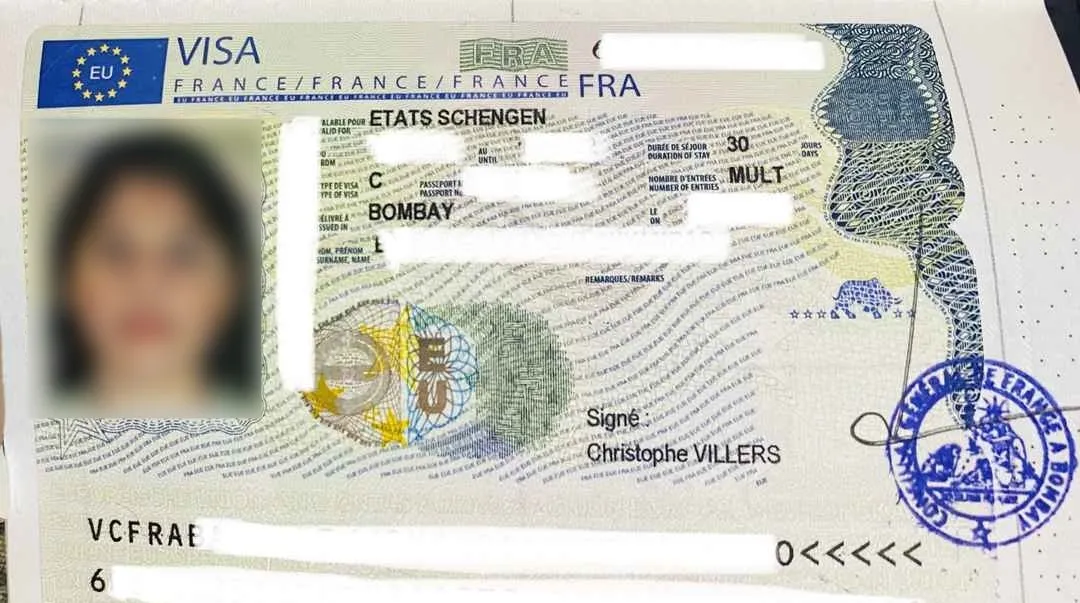
What is the Austria tourist visa validity for Indians?
The Austrian Schengen visa validity for Indians is up to 180 days, allowing a maximum stay of 90 days within this period.
The visa’s validity allows you to enter Austria and other Schengen countries multiple times, provided you do not exceed the 90-day stay limit within a 180-day period.
Example: If you enter Austria on January 1, you can stay until March 30, after which you must leave and wait another 90 days before re-entering.
What is the Austria visa fees for Indians?
The Austria visa fees for Indians are, for Adults: €90, for Children (6-12 years): €45, and for Children under 6 years: Free.
Please note: Fees may vary slightly due to exchange rate fluctuations and additional service charges from visa appointment centres.
What is the Austria visa processing time for Indians?
Austria visa processing generally requires 15 business days following the complete receipt of your application.
Processing times are subject to variation based on the need for an interview, requests for supplementary documentation, or elevated application volumes that may occur during periods of high travel demand.
Note: To facilitate timely visa processing, applicants are advised to submit their applications at least 4-6 weeks prior to their planned travel dates, particularly when traveling during peak travel seasons.
Can I travel to other Schengen countries with an Austrian tourist visa?
Yes, an Austrian Schengen visa allows you to travel freely to other Schengen countries without needing additional visas. However, when applying, you should clearly state your intention to visit multiple Schengen countries and provide a detailed itinerary covering your entire trip.
How many Schengen visas were issued to Indian citizens in the last years?
Based on 2022, more than 300,000 Schengen visas were granted to Indian nationals, with Austria representing a significant destination choice. This reflects considerable interest in Schengen visas among Indian travelers, and Austria remains a favored location for tourism, business-related activities, and family visits.
Important Note: Given the substantial demand, it is advisable to submit your visa application with sufficient lead time to ensure your travel arrangements are confirmed, particularly during periods of high travel volume.
What is the difference between a single-entry and a multiple-entry Schengen visa?
Single-Entry Visa: This visa permits a single entry into the specified Schengen Area. Upon exiting, re-entry is not permitted, regardless of the visa’s remaining validity.
Multiple-Entry Visa: This visa type facilitates repeated entry and exit into the Schengen Area, provided that the cumulative stay does not surpass the 90-day limit within a 180-day period.
Can I apply for a multiple-entry Schengen visa for Austria?
Yes, you can apply for a multiple-entry Schengen visa for Austria. This visa allows you to enter and exit the Schengen Area multiple times within the validity period. It is particularly useful for travellers who plan to visit Austria and other Schengen countries frequently.
Details:
Validity: Multiple-entry visas are typically issued for 1, 3, or 5 years, depending on your travel history and the consular officer’s discretion.
Stay Limit: Despite having a multiple-entry visa, you can only stay for a maximum of 90 days within a 180-day period.
How do I get a multiple-entry Austria Schengen visa?
To secure a multiple-entry Schengen visa, especially considering recent adjustments benefiting Indian applicants, please adhere to the following procedure:
Demonstrate Travel History: Initially, acquire and legitimately utilize two Schengen visas within the preceding three years.
Submit Multiple-Entry Visa Application: Following fulfillment of the preceding requirement, submit an application for a multiple-entry visa, which may initially be valid for up to two years. Subsequent proper use of this visa permits application for a five-year multiple-entry visa.
Validate Passport Validity: Confirm that your passport maintains sufficient validity to cover the complete duration of the multiple-entry visa you are requesting.
Present Comprehensive Justifications: Your application should clearly articulate the rationale for necessitating multiple entries, for example, recurring business engagements, familial visits, or sustained travel demands.
Leverage the Cascade System: The European Union’s “cascade” system enables Indian nationals to transition from a two-year visa to a five-year visa, offering comparable travel privileges to visa-free citizens provided all conditions are satisfied.
Refer to Relevant EU Regulations: Visa Code Regulation (EC) No 810/2009 governs the issuance of Schengen visas. Recent amendments have streamlined access to long-term visas for Indian nationals with a documented travel history through the implementation of the “cascade” system.
For comprehensive guidance, please consult the resources at European External Action Service.
What are the chances of getting a long-term Schengen visa for Austria?
Obtaining a long-term Schengen visa (valid for up to 5 years) is contingent upon several key considerations, notably:
Prior Immigration Compliance: A demonstrated record of adherence to relevant Schengen visa regulations, specifically including consistent and punctual departures.
Substantiated Travel Purpose: A comprehensive explanation outlining the demonstrable requirement for regular travel to Austria or other Schengen nations, typically supported by justifications such as business engagements or familial obligations.
Accurate Application Submission: Submission of a fully completed application package, incorporating all mandated documentation and devoid of any inconsistencies or inaccuracies.
Note: Frequent travel within Europe may warrant consideration for a long-term visa; ensure your application clearly articulates the necessity for multiple entries.
How does the visa processing time vary during peak seasons?
Visa processing timelines are often extended during periods of heightened demand, notably encompassing the summer months (May through August) and the holiday season spanning from November to January. Elevated application volumes observed during these periods contribute to increased processing durations.
Are there any recent changes in the Austria visa process for Indian citizens?
Recent updates to the Austria Schengen visa process for Indian citizens include:
Digital Application: The application process is increasingly digitalized, allowing applicants to fill out forms and submit some documents online.
Biometric Data: Biometric data (fingerprints and a photograph) is now required for all applicants except those who have submitted this data within the last 59 months.
Visa Fee Increase: As of 2022, the visa fee for Schengen visas increased to €90 for adults.
Tip: Stay updated with the latest visa requirements and guidelines by regularly checking the official visa application centre’s website or consulting a visa expert.
How does Austria rank among Schengen countries in terms of visa application volume and rejection rates?
Austria is a popular Schengen destination, but its rejection rate is moderate compared to other countries. In 2022, Austria processed over 100,000 visa applications from various countries, with a rejection rate of approximately 7.4%.
Stat: Austria’s rejection rate is slightly lower than the overall Schengen rejection rate, making it a relatively accessible destination for visa applicants.
How can a businessman succeed in obtaining an Austrian visa?
To strengthen your Austrian visa application as a business applicant, it is crucial to demonstrate robust financial standing and the specific rationale behind your travel. Here’s a breakdown of the required documentation:
Comprehensive Business Financial Records: Submit recent financial statements detailing your business’s performance, including profit and loss accounts, balance sheets, and bank statements, with a minimum coverage period of six months.
Official Business Registration Credentials: Provide authenticated copies of your business registration documents, such as your GST certificate, company PAN card, and incorporation certificate.
Business Tax Compliance Documentation: Include your business’s income tax returns for the preceding two years, serving as evidence of financial health and stability.
Formal Business Invitation: If the visit is for business purposes, include an official invitation letter from your Austrian business associate or the organization you intend to visit. This letter should explicitly state the objectives of your trip and the anticipated duration.
Note: Your cover letter should clearly articulate the connection between your business operations and the purpose of your visit, thereby establishing the validity and legitimacy of your travel intentions.
What should an unemployed person with passive income do to strengthen their visa application?
To bolster your visa application when demonstrating a consistent passive income (including sources like investments, rental income, or pensions), applicants should submit the following documentation:
Evidence of Passive Income: Submit comprehensive documentation verifying regular income streams from passive sources, such as lease agreements, dividend reports, or interest statements related to investments.
Bank Statements: Present bank records demonstrating consistent passive income received over the preceding six months.
Income Tax Returns: Include your most recent income tax returns, specifically detailing the declared passive income amounts for the previous two years.
Asset Ownership Records: If relevant, supply documentation confirming ownership of assets producing passive income, including property titles or investment certificates.
Note: A detailed explanation of your passive income sources should be presented in your cover letter, and all submitted financial documents must align with the information provided.
How can a retired individual succeed in applying for an Austrian visa?
To enhance your Austrian visa application success, particularly if you are retired, you must demonstrate sufficient financial resources and a well-defined purpose for your visit. The following documentation is typically required:
Pension Account Statements: Submit your most recent pension account statements covering the preceding six months, to substantiate a consistent and reliable income source.
Bank Account Statements: Provide bank statements reflecting a maintained balance and regular pension deposits.
Evidence of Savings or Investments: Include documents detailing savings accounts or investments that contribute to your overall financial security, examples include fixed deposits, mutual funds, or property ownership records.
Retirement Verification: Present a copy of your official retirement certificate or a letter from your former employer affirming your retirement status.
Travel Plans and Accommodation Details: Submit a comprehensive outline of your intended travel itinerary and detailed arrangements for your accommodation within Austria.
Note: Should a family member be providing financial support for your trip, include a sponsorship letter along with documentation verifying their financial capacity to cover your stay.
How can I show strong ties to India when applying for an Austrian visa?
To strengthen your application for an Indian visa and demonstrate your intention to return, applicants must present compelling evidence of significant ties to their home country. This includes:
Verification of Employment: Submit a formal letter from your employer detailing your current role, salary, and approved leave duration. The letter should explicitly state that your position will remain open upon your return.
Property Ownership Documentation: Provide documentation confirming ownership of real estate within India, including evidence such as property deeds or land titles. This demonstrates substantial investment in your home country.
Family Status Documentation: Submit relevant family-related documents, such as marriage certificates or birth certificates of dependent children, to illustrate your familial obligations and responsibilities in India.
Academic Records: If you are an enrolled student, furnish a letter from your educational institution affirming your continued enrollment and planned return to complete your studies.
Note: A robust collection of supporting documentation pertaining to your ties to India will significantly bolster your visa application.
What can I do if my bank balance fluctuates significantly?
If your bank balance fluctuates significantly, it’s important to provide additional context to avoid raising concerns with the visa officer:
Provide Explanations: If there are large deposits or withdrawals, include a brief explanation in your cover letter. For instance, if a large deposit is from a property sale or an annual bonus, mention this.
Submit Additional Proof: Provide other financial documents, such as fixed deposits, mutual funds, or property documents, to demonstrate overall financial stability.
Consistency is Key: If possible, try to maintain a consistent balance in your account in the months leading up to your application to show financial stability.
Tip: Be transparent about your financial situation and ensure all documents are in order to avoid suspicion or delays.
How can I prove that I have enough funds to support my travel in Austria?
To substantiate your financial capacity to support your travel to Austria, you must present the following documentation:
Current Bank Statements: Submit bank statements reflecting your financial status for the preceding six months, demonstrating a consistent and adequate balance.
Income Verification: Provide supporting documentation such as salary statements, pension statements, or other records confirming regular income receipts.
Proposed Travel Budget: Within your cover letter, detail a preliminary travel budget encompassing estimated expenses for lodging, sustenance, transportation, and recreational activities. Clearly articulate how your financial resources align with or surpass this projected budget.
Credit Card Records: If you intend to utilize credit cards for any expenditures, include recent credit card statements illustrating available credit limits.
Note: All submitted documents should be current, and the displayed balance must demonstrate sufficient funds to cover the entirety of your intended stay.
Can I show multiple sources of income to strengthen my visa application?
Yes, presenting multiple income streams can positively impact your visa application. You may demonstrate this by supplying the following:
Employment Income: Submit recent salary slips and bank statements detailing consistent earnings derived from your employment.
Passive Income: Provide evidence of income originating from investments, rental properties, or other recurring sources.
Savings and Investments: Present bank statements, fixed deposit details, or investment account information that reflects your overall financial standing.
Sponsorship Documentation: If a third party is providing financial support for your travel, furnish their relevant financial documents alongside a formal sponsorship letter.
Note: Within your application cover letter, systematically detail and explain each income source to offer a thorough representation of your financial circumstances.
What should I do if I haven’t filed income tax returns for the past two years?
If you haven’t filed income tax returns (ITRs) for the past two years, it may pose a challenge for your visa application. However, you can take the following steps to address the situation:
Provide a Cover Letter: Write a cover letter explaining why you haven’t filed ITRs. Common reasons might include recent employment, income below the taxable threshold, or being a dependent.
Submit Alternative Documents: Include other financial documents that prove your income and financial stability, such as bank statements, salary slips, or investment documents.
Sponsor’s ITR: If someone else is sponsoring your trip, submit their ITRs along with a sponsorship letter to strengthen your application.
How should I present my income tax returns for a successful visa application?
When preparing your income tax returns (ITRs) for an Austrian visa application, meticulous preparation and documentation are essential:
Required Duration: You must submit ITRs covering at least the preceding two fiscal years to establish a demonstrable record of financial stability.
Data Verification: All information presented on your ITRs must precisely align with details contained in your bank statements and other related financial documentation. Any inconsistencies may generate additional scrutiny from the visa officer.
Document Emphasis: It is advisable to clearly demarcate key sections within your ITRs, specifically including total income and the amount of tax paid, to facilitate a streamlined review of your financial circumstances by the consular officer.
Note: Include a concise statement in your cover letter summarizing your income and tax payments, and detailing their relevance to your ability to finance your intended travel.
Can I expedite the processing of my Austrian visa application?
There is currently no designated expedited processing pathway for Schengen visas. However, applicants can potentially facilitate a quicker assessment through meticulous application completion and verification. Certain visa application centers provide supplementary services, including prioritized appointment scheduling; however, these offerings do not constitute a guarantee of accelerated visa issuance.
Recommendation: Should urgent visa processing be required, it is strongly advised to meticulously confirm the validity and authenticity of all submitted documentation and to initiate the application process with sufficient lead time to mitigate the need for expedited processing services.
What is Schengen visa shopping?
Schengen visa shopping refers to the practice of applying for a Schengen visa through a country perceived to have a more lenient or faster visa approval process rather than through the country that is your primary destination. This is generally frowned upon by Schengen authorities and can result in visa rejection or complications during your travel.
Consequences of Visa Shopping:
Rejection: Visa applications can be rejected if the consulate suspects that you are not genuinely planning to visit the country through which you applied.
Entry Issues: Even if you receive a visa, you may face issues when entering the Schengen Area if immigration officials believe your main destination is not the country that issued your visa.
Record: Schengen authorities share information, and previous visa shopping attempts may affect future applications.
Tip: Always apply for a Schengen visa through the country where you plan to spend the most time or the country that is your first point of entry in the Schengen Area.
Can I work remotely while on a Schengen tourist visa?
No, you cannot legally work remotely or engage in any form of employment while on a Schengen tourist vi is intended for tourism, leisure, or short-term visits, not for work purposes.
Consequences: If caught working remotely, you could face penalties, deportation, and future visa bans.
How can I prove the purpose of my trip when applying for a Schengen visa?
You can prove the purpose of your trip by providing the following documents:
Tourism: Hotel reservations, a detailed travel itinerary, and return flight tickets.
Business: An invitation letter from a company or business partner in the Schengen Area and details of meetings or conferences you plan to attend.
Family Visit: An invitation letter from your host in Schengen, their proof of residence, and their relationship to you.
Tip: To strengthen your application, be as specific as possible in your cover letter, detailing the activities and plans you had during your stay.
I’m staying at an Airbnb. Do I need an invitation letter?
If you’re staying at an Airbnb, you generally don’t need a traditional invitation letter. However, you should provide proof of your Airbnb booking, such as a reservation confirmation from the platform, including the host’s contact information and address.
Do I need to get my bank statements signed and stamped for my Schengen visa application?
Yes, for your Schengen visa application, it is recommended to have your bank statements signed and stamped by your bank. This authentication ensures the legitimacy of the documents and is often required by consulates to verify that the financial statements are genuine.
Tip: Visit your bank and request them to print, sign, and stamp your bank statements with their official seal to meet the visa application requirements.
If my Schengen visa is from Germany, but I’m travelling to Austria, is that okay?
Yes, it is possible to enter Austria utilizing a Schengen visa granted by Germany. Nevertheless, it is recommended to adhere to Schengen regulations, which typically necessitate applying for a visa within the nation where you intend to spend the majority of your stay. Compliance with the visa’s stipulations ensures that neither an airline nor border control authorities can impede your entry into another Schengen country.
How to check available appointment dates for a Austria visa for Indians?
With the help of the VisaFast Schengen visa appointment tracker, you can now check the available appointment dates for the Austria Schengen visa.
What are the Austria visa requirements for Indians?
Here are the Austria tourist visa requirements for Indians:
Visa application form
Passport photo
Valid passport
Proof of identity
Proof of travel purpose
Proof of financial means
Proof of current social and professional status
Proof of travel
Proof of accommodation
Travel insurance
Application Form Requirements:
The Austria visa application must be submitted using a completed and signed online application form. A printed copy of the duly completed form is required as submission at the designated Visa Application Centre (VAC).
Passport Photograph Requirements:
An up-to-date passport photograph, compliant with Austrian visa specifications outlined at Austria visa photo specific requirements (such as a plain white background and a validity period of no more than 6 months).
Acceptable Passport:
A passport or travel document must be valid for a duration of at least 3 months days following your intended departure date from the Schengen Area. The passport must have been issued within the preceding 10 years and must include a minimum of two empty pages for endorsements.
Proof of identity:
A copy of your ID, which can be the Aadhaar or PAN Card.
Proof of travel purpose:
Provide a clear and concise cover letter outlining your personal information, purpose of visit, financial means and intent to return.
VisaFast will help you with a customizable cover letter during the application process, free of cost.
Proof of financial means:
The government needs proof of your capability to fund your stay, such as the bank account statements for the last three months and ITR acknowledgement for the last two years. The bank statements should be signed and stamped by your bank.
Proof of current social and professional status:
This can be an employment contract, leave approval letter from the employer or certificate of employment. To prove social ties, you can submit any other document demonstrating your personal links to the country of residence (e.g., a copy of the marriage certificate or family record book).
Travel Documentation:
You must submit evidence of return travel tickets and documentation verifying an intra-Schengen flight booking, train itinerary, or automobile rental agreement should you intend to visit multiple Schengen states.
VisaFast facilitates the presentation of roundtrip flight reservations, enabling applicants to showcase their travel arrangements without incurring financial obligations.
Accommodation Verification:
Provide documentation verifying your intended accommodation for the duration of your stay in Austria. If you are being invited, a notarised invitation letter from the inviting individual is required.
VisaFast facilitates accommodation arrangements through hotel reservations, enabling you to present documented travel plans without initial financial obligations.
Travel Insurance Requirements:
Applicants are required to possess travel insurance coverage valid for all Schengen Countries. The insurance policy must provide a minimum coverage of €30,000 or its equivalent, encompassing all risks, throughout the duration of the intended trip.
Important Consideration: Supplementary documentation may be necessitated based on the details outlined within the visa application. Specifically, a sponsorship letter will be required if the trip is financially supported through a sponsorship agreement.
What documents are required for minors applying for an Austrian tourist visa?
Minors seeking an Austrian tourist visa are subject to specific documentation requirements, including:
Consent Letter: A notarized letter of consent from the non-traveling parent(s) or legal guardian.
Supporting Identification: Copies of the passport, PAN card, or driving license of both parents or legal guardians.
Court Order or Authorization: If traveling without both parents, a court order or written parental authorization is mandatory.
Guardianship Documentation: For travel with a third party, provide documentation establishing guardianship and confirming parental consent.
Important Note: All submitted documents must be properly notarized and you should retain originals and certified copies for verification during your visa appointment.
Can I apply for a Schengen visa without a confirmed flight booking?
Yes, an application for a Schengen visa may be submitted without a pre-booked flight. However, submission necessitates providing a flight itinerary or reservation to substantiate your intended travel dates. Several visa agencies and airlines offer services facilitating the reservation of flight itineraries for visa applications, without requiring actual ticket purchase.
VisaFast offers readily verifiable flight reservations at no cost, enabling applicants to demonstrate their travel plans while avoiding financial obligations.
Is travel insurance mandatory for an Austrian tourist visa?
Yes, travel insurance is required when submitting an application for an Austrian tourist visa. The insurance policy must include a minimum coverage amount of €30,000 and remain valid for the duration of your intended stay within the Schengen Area. Coverage must extend to encompass medical emergencies, repatriation services, and hospital treatment.
Note: Applicants seeking a multiple-entry visa should verify that their travel insurance policy provides coverage for their initial journey and facilitates renewal coverage for subsequent trips.
Several insurance providers offer policies designed to satisfy Austrian visa criteria at a competitive price; for example, VisaFast provides travel insurance solutions that align with Schengen visa stipulations.
What are the Austria visa photo requirements for Indians?
To ensure your visa application is processed smoothly, your passport photo must comply with the specifications outlined in Austria Schengen visa photo requirements. Specifically, the photograph must adhere to the following criteria:
Dimensions: The photo must measure 35 mm by 45 mm (width by height).
Head Size: The head of the applicant should constitute 70-80% of the image, with a measurement of approximately 32-36 mm from the chin to the crown of the head.
Background: The image must be in colour and feature a plain white or light grey background.
Facial Positioning: The applicant’s face must be centrally positioned and the gaze should be directly at the camera, maintaining a neutral expression.
Eye Visibility: Both eyes must be fully open and clearly visible, without any reflections or obstructions.
Glasses: If glasses are worn, the lenses must be free of glare and reflections, ensuring that the eyes are clearly visible. Tinted lenses are not permitted.
Headwear: Head coverings are generally not permitted unless for religious observance. When headwear is worn, the entire face – from the bottom of the chin to the top of the forehead – must be visible, with clear visibility of the edges of the face.
Important Note: It is essential that your photograph meets all these requirements to prevent processing delays or visa application rejection. Consulting with a professional photographer experienced in meeting Schengen visa photography standards is strongly recommended.
What is the minimum bank balance required for an Austrian tourist visa for Indians?
While Austria does not stipulate a specific minimum bank balance, applicants must prove they possess adequate financial resources to cover their intended period of stay in the Schengen Area. A common benchmark suggests maintaining a daily balance of approximately €60-€70, which equates to roughly €1,800 to €2,100 for a 30-day trip.
Note: To bolster your application, it is advisable to demonstrate a sustained bank balance for a period of six months prior to submitting your application. Unexplained fluctuations or significant deposits may warrant further scrutiny.
What type of financial proof is required when applying for an Austrian visa?
To demonstrate your ability to meet your financial needs while in Austria, applicants are required to submit the following financial documentation:
Bank Statements: Please supply original bank statements spanning the preceding six months. These statements must demonstrate consistent income, typically reflected as salary deposits, and should exhibit a sufficient account balance.
Income Tax Returns (ITR): Submission of copies of your Income Tax Returns for the last two years is mandatory. This documentation is essential for verifying your financial stability.
Salary Slips: If you are currently employed, please include your salary slips covering the most recent three to six months.
Proof of Investments: Additional financial evidence may be submitted, such as records of fixed deposits, mutual funds, or property holdings, to supplement your financial information.
Note: All submitted documents should be legible and comprehensive, encompassing the stipulated period to prevent potential delays or the possibility of rejection.
Are income tax returns mandatory for an Austrian visa application?
Yes, submission of income tax returns (ITRs) is typically required when applying for an Austrian visa. These ITR documents serve to substantiate your financial resources and consistent income, factors considered essential for demonstrating your ability to maintain financial self-sufficiency throughout your stay in Austria and for confirming your intention to return to India upon completion of your visit.
Required Documents:
- You must provide copies of your ITR filings for the preceding two fiscal years.
- It is imperative that your ITRs accurately reflect your income and correspond with the bank statements you are submitting as part of your application.
Can I apply for an Austrian visa if I have dual citizenship?
Yes, an Austrian visa application is possible with dual citizenship. It is essential to utilize a single passport throughout the entire application procedure. Generally, the passport intended for initial entry into Austria should be used, alongside the Schengen region documentation.
What should I do if my passport is set to expire soon but I need to apply for an Austrian visa?
If your passport’s expiration date is approaching, it is necessary to renew it prior to submitting an application for an Austrian visa. Your passport must remain valid for a minimum of three months beyond your anticipated departure date from the Schengen Area.
Note: Ensure your passport contains sufficient blank pages to accommodate the visa and any required stamp. Renewing your passport in advance of application can mitigate potential issues and streamline the visa processing timeline.
What if I only have one empty page left in my passport, but my passport is not expired?
Recommendation: Given limited blank pages in your passport, visa issuance may be possible, though destination immigration authorities may necessitate additional space for stamp application. To ensure compliance, it is recommended to proactively renew your passport. An Indian passport renewal via the ‘Tatkal’ (express) service generally takes approximately 3 days.
Can I apply for a Schengen visa if my accommodation is not confirmed?
Yes, an application for a Schengen visa may be submitted without confirmed lodging; however, prospective applicants must furnish evidence of temporary arrangements, including hotel reservations or invitation letters from hosts who will provide accommodation.
Note: When accommodation arrangements are subject to change, consider securing a hotel reservation with a readily available cancellation policy. This flexibility enables adjustments to your booking without incurring associated charges upon visa approval.
Can I apply for a Schengen visa if I have overstayed on a previous visa?
Yes, you can apply for a Schengen visa if you have overstayed on a previous visa, but you must be prepared to explain the circumstances of the overstay and provide evidence that it was unintentional or unavoidable.
Tip: A clear and honest explanation, along with supporting documents (such as medical records if the overstay was due to health reasons), can help mitigate the negative impact of a previous overstay.
Can I apply for a Schengen visa if I am currently residing in a country other than India?
Yes, an Indian applicant may apply for a Schengen visa for a country different from India, provided they maintain legal residency in that country. The application requires documentation verifying this residency, including a valid residence permit or visa.
Important Note: To qualify, the applicant’s residency status must be current and valid for a minimum period of three months beyond the intended duration of their stay in the foreign country.
Do I need a cover letter for my Schengen visa? What should I include?
Yes, a cover letter is typically required for a Schengen visa application. It should include:
Personal Information: Your name, address, and passport number.
Purpose of Visit: Detailed explanation of why you’re visiting (tourism, business, family visit).
Itinerary: Outline your travel dates, accommodation, and places you plan to visit.
Financial Means: State how you’ll finance your trip and attach supporting documents.
Intent to Return: Explain your ties to your home country, ensuring you’ll return after your trip.
What’s an invitation letter? If I’m staying in a hotel, do I need one?
An invitation letter is a document issued by an individual intending to host you in the Schengen Area, confirming their invitation and assurance of support during your visit. When your accommodation is secured through a hotel, an invitation letter is typically unnecessary. Instead, presenting valid hotel reservations serves as sufficient evidence of your intended lodging arrangements.
I’m staying with a friend. Do I need an invitation letter?
Yes, if you’re staying with a friend in the Schengen Area, you will need an invitation letter from them. The letter should include:
Your Friend’s Information: Name, address, and a copy of their passport or residency permit.
Accommodation Details: Confirmation that they will host you during your stay.
Relationship: A brief explanation of your relationship with the host and the purpose of your visit.
How to get Austria visa for Indians?
Here are the steps to get a Austria Schengen visa for Indians:
Step 1: Visit VisaFast, choose Austria as your destination and start visa application
Step 2: Enter your details such as full name, travelling alone or in a group, who is sponsoring your trip, marital status, employment status and current resident address.
Step 3: Enter your passport details and additional details depending on your employment status
Step 4: Choose an appointment date. Make sure you are booking the appointment date at least 6 months to two weeks before your departure date.
Step 5: Choose your travel dates and tentatively decide which Schengen countries (apart from Austria) you are planning to visit.
Step 6: Pay the fees and reserve your appointment
Step 7: Go to the visa application centre on your scheduled date and submit your documents. VisaFast will arrange for your documents to be submitted in the correct order. During your visit, you’ll also complete the required biometrics (fingerprints and facial scans). If you hold a biometric Schengen visa issued in the past 59 months, your previous biometric data can be reused.
Step 8: Pay the Visa application centre fees and wait for the processing, including travel insurance and courier fees, to be completed.
Step 9: Once approved, your passport with a Austria tourist visa stamp will be delivered directly to your home.
Tip: Begin your visa application process at least 6-8 weeks before your planned travel date to account for processing time and any unforeseen delays.
Is an interview mandatory when applying for an Austria Schengen visa?
A consular interview is not required for the Austria visa application. Nevertheless, an interview may be mandated by the visa officer if the application is deemed deficient or inaccurate. Applicants are required to schedule an appointment and attend the Visa Application Centre to present their documentation, including biometric data collection – specifically, fingerprinting and photographic capture.
What kind of questions will I be asked in the Austria visa interview?
If the visa officer determines that your submitted Austrian visa application is incomplete, they may request an interview to gather further information. The questions posed during your Austrian visa interview will be tailored to your specific situation and the reason for your visit. Typical areas of investigation include:
Purpose of Travel: Please clearly state the reason for your visit to Austria (e.g., tourism, business, family visit).
Length of Stay: Specify the anticipated duration of your stay in Austria.
Proposed Itinerary: Detail the cities you intend to visit and the planned activities.
Accommodation Arrangements: Provide information regarding your lodging (e.g., hotel, residence of a friend).
Financial Capacity: Explain how you intend to finance your trip, supported by relevant documentation such as bank statements or sponsorship letters.
Prior Travel Experience: You will likely be asked about your previous travel history to Schengen countries. Details regarding compliance with visa regulations during those visits will also be scrutinized.
Employment Details: Please describe your current occupation and provide information about your employment history, including your length of service.
Family and Dependents in India: Information regarding any family members or dependents residing in India should be disclosed.
Return Intentions: It is crucial to articulate the reasons for your return to India following your visit. This may include your employment status, property ownership, or family commitments.
Important Note: Provide truthful and comprehensive responses to all questions. Any discrepancies or inaccuracies may result in delays or the rejection of your application.
What should I do if I am a housewife with no independent income to succeed in my Austria visa application?
As an applicant without independent income, you can pursue an Austrian visa by submitting the following documentation:
Sponsorship Declaration: Acquire a sponsorship declaration from your spouse or a close family member outlining their commitment to finance your travel expenditures, along with a detailed description of their relationship with you.
Spouse’s Financial Records: Present your spouse’s bank statements, income tax returns, and salary verification documents to substantiate their financial capacity to support your trip.
Marriage Certificate: Provide a certified copy of your marriage certificate to formally recognize your relationship with the sponsoring individual.
Evidence of Joint Assets: If applicable, submit documentation demonstrating shared ownership of property or bank accounts, serving as further evidence of your combined financial circumstances.
Note: Ensure all sponsorship documentation is presented in a systematic manner and convincingly demonstrates the provision of financial assistance for your trip.
When I submit my documents for the Austrian visa, will there be an interview, or is it just document submission?
When you go to submit your documents for an Austrian Schengen visa, there is typically no interview required. The process generally involves:
Document Submission: Submit all the required documents, including your passport, application form, photographs, and supporting documents.
Sign and Pay: Sign the application form, pay the visa fee, and keep the receipt for your records.
Biometrics: You will be required to provide biometric data (fingerprints and a digital photograph) unless you have submitted this data within the last 59 months.
Tip: Ensure all your documents are complete and well-organized before your appointment to avoid any delays in processing.
Can I include multiple family members in one Schengen visa application?
No, each family member must submit a separate Schengen visa application, including children and infants. Each applicant must meet the requirements and provide their own set of documents.
Tip: When applying as a family, submit all applications together to ensure they are processed simultaneously and to streamline the appointment process.
How long before Indians should apply for Austria Schengen visa?
Applicants of Indian nationality must submit their Austrian visa applications no later than 6 months prior to the intended travel dates. Furthermore, applications should be submitted at least 2-4 weeks in advance of the trip’s commencement. Applicants should account for peak travel periods, national holidays in Austria, and public holidays in Schengen to ensure timely submission of their applications.
How can I check the status of my Austria Schengen visa application?
To monitor the progress of your Austrian visa application, you may utilize the VisaFast Austria visa status tracker.
How to read the Austria Schengen visa sticker for Indians?
Here is how to read your Austria Schengen visa sticker number:
1. Validity (territorial scope)
“VALABLE POUR / VALID FOR” - tells you which countries you can enter.
• If it says “ETATS SCHENGEN”, you can travel in the Schengen area.
• It might list or exclude specific country codes (e.g. “(-DE, SE)”) indicating exceptions.
• Or it may limit to Austria only, or Austria + transit, etc.
2. From / To dates
DU / FROM” and “AU / UNTIL”
These two dates define when you may use the visa (entry and exit window).
Note: this is the validity period of the visa, not the maximum length of stay.
3. Visa Type
“TYPE DE VISA / TYPE OF VISA” designates the specific visa category.
• “A” represents an Airport Transit visa. • “C” signifies a Short-Stay visa, with a maximum permitted duration of 90 days. • “D” denotes a Long-Stay visa for periods exceeding 3 months.
4. Number of Entries Allowed
“NOMBRE D’ENTREES / NUMBER OF ENTRIES” specifies the permitted number of times you may complete the Schengen section. The options available are: “1” indicating a single entry, “2” representing two entries, and “MULT” denoting multiple entries are permitted.
5. Duration of stay
“DURÉE DU SÉJOUR / DURATION OF STAY” - The maximum number of days you may stay during the visa period (subject to other rules).
For a circulation visa (valid long-term), it is commonly “90 jours” (90 days) — even if the validity period is longer.
6. Issued location & date
“DÉLIVRÉ A / ISSUED IN” and “LE / ON” - The city (place) where the visa was issued, and the date when it was issued.
7. Passport Number
“NUMÉRO DE PASSEPORT / NUMBER OF PASSPORT” – This refers to the passport number that will be affixed with the visa.
8. Personal Information: Name
“The applicant’s surname and given name(s) must be provided as they appear on the visa document.”
9. Remarks / Additional information
“REMARQUES / REMARKS” - Any extra notes: purpose of travel, special conditions, restrictions, etc.
What can I do if my Austria tourist visa application is rejected?
If your Austrian visa application is rejected, you have the right to appeal the decision. You must submit an appeal within 30 days of receiving the rejection notice.
Review the Rejection Reasons: Carefully examine the reasons provided for the rejection.
Reapply: You can reapply after addressing the reasons for rejection, ensuring all documents are complete and accurate
Gather Additional Evidence: Collect any missing documents or additional evidence that addresses the reasons for rejection.
Write an Appeal Letter: Draft a detailed appeal letter explaining why the decision should be reconsidered and include supporting documentation.
Submit the Appeal: Submit the appeal to the Austrian consulate or embassy that processed your visa application.
Tip: Consider seeking legal or professional advice when preparing your appeal to strengthen your case.
What should I do if my Austrian visa is approved but I need to change my travel dates?
If your Austrian visa is approved but your travel dates change, you can still use the visa as long as the new travel dates fall within the visa’s validity period. However, if your new travel dates are outside the visa’s validity, you will need to apply for a new visa.
Tip: When booking flights and accommodations, ensure they align with the visa’s validity period to avoid complications.
Can I get a refund for my Schengen visa fee if my application is rejected?
No, the Schengen visa fee is non-refundable, even if your visa application is rejected.
What should I do if I need to change my travel dates after my Schengen visa is approved?
If you require to modify your travel dates following approval of your Schengen visa, prior to entering the Schengen Area, you must:
Verify Visa Validity: Confirm that your revised travel dates align within the validity period stipulated on your visa.
Consult with the Consulate: Should your updated dates extend beyond the visa’s validity, it is essential to contact the issuing consulate to explore potential options, which may include the application for a new visa.
Note: Provided your visa remains valid, you may update your flight and accommodation reservations. However, retain all original documentation and any new confirmation records as these may be requested by immigration officials.
Can Indians extend their Austrian tourist visa?
No, you cannot extend an Austrian tourist visa, as it is a Schengen visa. Extensions are only granted in exceptional cases, such as medical emergencies or other unforeseen circumstances. If you need to stay longer, you must leave the Schengen Area and apply for a new visa.
Tip: Plan your travel carefully to avoid overstaying your visa, as this can result in fines, deportation, or future travel bans.
Can I stay in Austria after my Schengen visa expires?
No, you are not permitted to remain in Austria or any Schengen Schengen country beyond the validity period of your visa. An overstay constitutes a violation of immigration laws and may lead to financial penalties, deportation proceedings, and a permanent prohibition from entering the Schengen European Union.
My visa expires on August 15, 2024. I am leaving on August 14, 2024. Is that okay?
Yes, it is perfectly fine to leave the Schengen Area on August 14, 2024, a day before your visa expires. You are required to exit the Schengen Area before or on the last day of your visa validity, which in this case is August 15, 2024.
Can I extend my Austria Schengen visa?
No, a short-stay Schengen visa cannot be updated.
Upon expiry of a short-stay visa, you must leave the country. The renewal of a short-stay visa is impossible.
If, for some exceptional reasons, you wish to extend your stay —for example, for health reasons — you should contact the local immigration office in Austria.
Can I travel to Austria before my Schengen visa start date?
No, it is prohibited to enter Austria or any other Schengen nation prior to the commencement date indicated on your visa. Your visa documentation will detail the permitted timeframe for entry and subsequent stay within the Schengen Zone. Unauthorized entry before this date is subject to denial of access.
Note: Carefully coordinate your travel dates to confirm they fall within the validity period of your visa. Any alterations to your travel plans necessitate a new visa application.
What happens if I lose my passport with an Austrian visa while traveling?
If you experience a loss of your Austrian visa-related passport during travel, it is imperative to immediately file a report with the local police and secure a corresponding police record. Subsequently, you must present yourself at the closest Indian embassy or consulate to initiate the process of obtaining an emergency passport.
Recommended Actions:
Report the loss to the appropriate law enforcement agencies and obtain a formal police report.
Proceed to the nearest Indian embassy or consulate to formally apply for an emergency travel document.
Contact the Austrian consulate to notify them of the loss and to ascertain the feasibility of requesting a visa reissue.
Important Note: To streamline the replacement procedure, maintain copies of your passport, visa, and other pertinent documents in a secure location, distinct from the originals.
Can I bring my pet to Austria with a Schengen visa?
Yes, it is possible to travel to Austria with a Schengen visa accompanied by your pet; however, several stipulations must be satisfied:
Microchip Identification: Your animal companion must possess a microchip conforming to the ISO 11784/11785 standard, featuring a 15-digit pet identification code.
Rabies Vaccination Obligation: A rabies vaccination is mandatory for your pet, and the immunization must be administered no less than 21 days prior to your arrival in Austria.
Veterinary Documentation: Travelers originating from within the European Union should present a valid EU pet passport. Individuals entering Austria from territories outside the EU will need to provide a certificate issued by a licensed veterinarian in the animal’s country of origin.
Fecal Sample Examination: Dogs are required to undergo a fecal examination for tapeworm treatment, conducted 24-120 hours before entry into Austria.
Important Note: Thoroughly investigate the particular stipulations regarding pet importation into Austria and the Schengen Zone prior to your journey to guarantee adherence to all relevant regulations.
Can I bring prescription medication into Austria on a Schengen visa?
Yes, it is possible to import prescription medications into Austria with a Schengen visa; however, you must provide supporting documentation including:
Patient Details: Your complete name and a statement detailing the specific medical condition for which the medication is prescribed.
Medication Specifications: The exact name of the drug, its dosage, and the quantity prescribed.
Physician Verification: A letter from your prescribing physician, including their full name, practice address, and contact information.
Important Note: Maintain the medication within its original packaging and limit the amount brought into Austria to the minimum required for the duration of your authorized stay. Review current Austrian laws and regulations regarding permitted medications and any potential restrictions on specific pharmaceutical products.
Can I travel to non-Schengen countries with a Schengen visa?
While a Schengen visa allows you to travel freely within the Schengen Area, it does not grant you entry to non-Schengen countries. Each non-Schengen country has its own visa requirements.
Can I leave the Schengen area and return again with my Austria Schengen visa?
If your Austria Schengen visa issued for:
Single entry: You can enter the Schengen area only once and cannot return with Austria Schengen visa again.
Multiple entry: You can enter two or multiple times during the validity of your visa, depending upon number of entries mentioned on your visa sticker, “02” or “MULT”
What are the Austria entry requirements for Indians?
Here are the Austria entry requirements for Indian applicants:
Valid passport.
A valid Austrian Schengen visa is required.
Applicants must demonstrate sufficient funds to cover their expenses during their stay.
Proof of return travel arrangements, such as round-trip flight tickets, must be provided.
Note: Applicants are advised to retain copies of all documentation submitted to the visa application centre during the application process (e.g., letters of invitation, travel confirmations, and other documents detailing the purpose of their intended stay).
What is the EES system in Austria?
Indians intending to enter or depart Austria and the encompassing Schengen Area must adhere to the Entry Exit System (EES) from 12 October 2025.
Passport stamps will no longer be utilized upon entry and exit from Austrian territory. A novel system for documenting entries and exits within the Schengen Area will be implemented for short stays (with a maximum duration of 90 days).
This electronic system will facilitate the tracking of entries, exits, entry refusals, and periods of stay.
The data collected will encompass:
- The date and time of entry and exit from the territory.
- The location of entry and exit.
- Your family name(s) and given name(s).
- Your passport number.
- Your photograph.
- Your fingerprints.
- The potential decision to deny entry for short stays (lasting less than 90 days).
- Please note: Registration will occur at the border crossing upon arrival in Austria. Failure to provide the requested data may prevent travel across the border.