
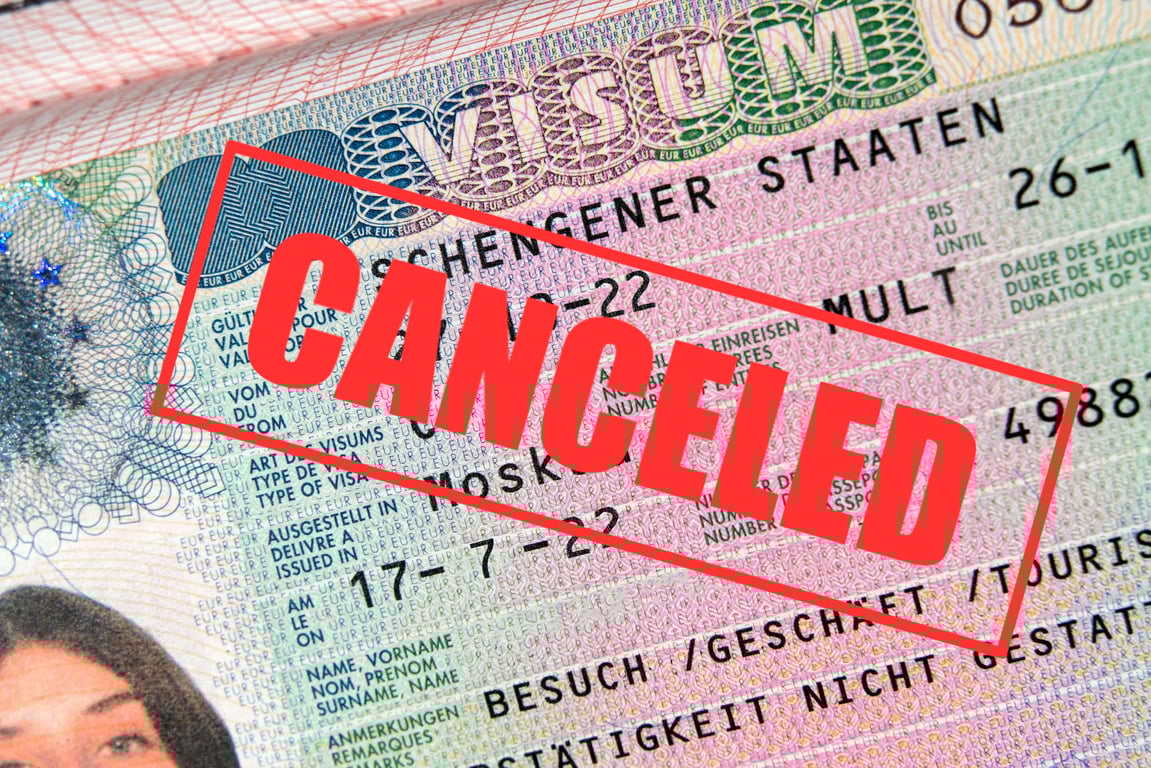
Schengen countries refused 1.71 million visa applications in 2024, representing 14.8% of the 11.72 million submissions that year. This marks a gradual improvement compared with 2023 (16%) and 2022 (17.9%), although refusal levels remain higher than several pre-pandemic periods—2021 stood at 13.4%, albeit with significantly lower application volumes. Notably, multiple-entry visas (MEVs) accounted for 52.2% of approvals, reinforcing the trend that consular posts continue to favor applicants with solid, well-documented travel histories.
Why are Schengen visas refused?
The primary driver is stricter and more uniform enforcement of Schengen regulations across member states. Even minor errors—such as inconsistent travel dates, insufficient financial evidence, weak home-country ties, an unclear travel purpose, or non-compliant insurance—can result in a refusal. Outcomes also differ considerably depending on where you apply, as refusal rates are tied to the specific consulate rather than nationality. Some posts record single-digit refusal rates, while others exceed 40%.
At VisaFast, we’ve processed Schengen visas for hundreds of travelers. In this guide, we break down the most common Schengen visa rejection reasons in 2025, explain what consulates evaluate, and show you how to strengthen weak areas—whether your refusal cites “purpose of travel not clear” or you’re applying for the first time and want to avoid mistakes from the outset.
Disclaimer (Schengen travel planning)
Under Schengen rules, you must apply through the country that is your main destination—either where you will spend the most nights or where the primary purpose of your trip takes place. If no main destination can be identified, apply to the country of first entry. Your actual travel should align with the itinerary you submit. Providing false information or making material changes—such as shifting your longest stay to another country—can lead to border questioning, refusal of entry, or annulment/revocation of the visa.
Common Reasons for Schengen Visa Rejection:
After reviewing and processing hundreds of Schengen visa applications, here are the most common reasons for Schengen visa rejection:
Lack of strong ties with the home country
Lack of funds to cover the entire trip
Mismatch of travel documents provided
Invalid passport
Invalid travel insurance
Unclear purpose of travel
Previous visa violations
Having a criminal history
Fake hotel and flight reservations
Missing supporting documentation
Here’s a detailed account of the above-mentioned reasons for Schengen visa refusal, along with tips on how to avoid them.
1. Lack of Strong Ties with the Home Country
One of the key considerations in any Schengen visa assessment is whether the applicant has compelling reasons to return to their home country after the trip. Consulates need confidence that you will respect the visa conditions and depart on time. When evidence of ties is weak—or poorly documented—such as limited proof of employment, family obligations, financial stability, or property ownership, it can raise doubts about your intent to return and lead to a refusal.
How Can You Prevent This?
To reduce the risk of rejection, submit clear, well-organized, and verifiable documentation that demonstrates your ongoing commitments at home.
Below is a comprehensive list of documents commonly accepted as strong proof of home-country ties:
Employment or business ties: If you are employed, provide an official letter from your employer confirming your designation, salary, length of employment, and approved leave. The letter should also state that your role will remain available upon your return. Self-employed applicants should include business registration certificates, tax filings, and evidence of regular income, which help establish financial stability and professional continuity.
Family responsibilities: Documents such as marriage certificates, children’s birth certificates, or legal guardianship papers help demonstrate family obligations. These are particularly important for applicants with dependents, including parents, homemakers, or caregivers.
Property or long-term residence: Submit title deeds, registered lease agreements, or utility bills for property owned or rented in your name. Property ownership or long-term residence indicates a significant personal and financial stake in your home country. This can be especially valuable for retired or unemployed applicants who may not have employment-based ties.
Educational commitments: Students should include an official letter from their school or university confirming current enrollment, course details, and academic term dates, along with confirmation that studies will continue after the planned travel period.
Providing strong, consistent evidence across multiple categories reassures consular officers of your genuine intention to return home and can substantially improve your chances of securing a Schengen visa.
Tip: Combining different types of proof—such as employment confirmation, property documents, and family ties—creates a far more persuasive application than relying on a single source of evidence.
2. Lack of Funds to Cover the Entire Trip
When applying for a Schengen visa, you are required to demonstrate that you have enough financial resources to cover your trip, including accommodation, meals, transportation, and other expenses.
Your finances should realistically align with your travel plans. For instance, if your itinerary includes a stay at a five-star hotel, your bank balance should reflect the ability to afford such accommodation. Inconsistencies or insufficient funds in your financial documentation can lead to visa refusal, as authorities need assurance that you will not become a financial burden in the Schengen area.
As a general guideline, a minimum of €100–120 per day of travel is recommended, which equates to approximately €3,000–€3,600 for a 30-day trip. Some countries have specific minimum requirements, such as Poland, which mandates a daily balance of 75 PLN per day. Failure to meet these standards may result in a rejection.
How to Avoid This Problem
To minimize the risk of refusal due to inadequate funds, ensure your financial documents clearly prove that you can cover all travel-related expenses. Key steps include:
- Research country-specific requirements: Different Schengen states may have their own financial thresholds; check before submitting your application.
- Calculate your actual needs: If no official minimum exists, base your calculation on your planned itinerary and ensure your account balance comfortably exceeds that amount—€100–120 per day is generally considered safe.
- Provide supporting evidence: Include documents such as recent salary slips, employer letters, or proof of other assets. If a sponsor is funding your trip, attach a sponsorship letter, their bank statements, and proof of your relationship.
Tip: Submit official bank statements covering the last 3–6 months that show consistent income and transactions. Avoid sudden large deposits right before applying unless you can provide a clear and credible explanation, as this can trigger scrutiny.
3. Incorrect or Mismatched Information
One of the most frequent reasons for a Schengen visa refusal is incorrect or mismatched information. This occurs when details in your application differ from your supporting documents, such as name, date of birth, travel dates, or passport information. Even small discrepancies, like inconsistent addresses, can raise doubts about the authenticity of your application.
Important: Always provide accurate and truthful information. Intentional misrepresentation or submitting forged documents can result in outright denial and may even lead to a ban on future visa applications.
How to Prevent This
Carefully review your application form and all supporting documents to ensure all details match perfectly. Key steps include:
- Cross-check with your passport and documents: Keep all official documents on hand when filling out your application to ensure consistency in names, dates, and other personal details.
- Follow official guidelines: If uncertain about any section, refer to instructions from the embassy or consulate, or consult a trusted visa consultant.
- Proofread with a second pair of eyes: Ask friends or family to review your application to catch any mistakes you might have overlooked.
Ensuring complete accuracy and consistency across all documents significantly reduces the risk of a Schengen visa rejection.
4. Invalid passport
A Schengen visa application can be refused if your passport does not meet the standard requirements:
- Validity: Must be valid for at least six months beyond your planned departure from the Schengen Area.
- Blank pages: Should have at least two empty pages for visa stamps.
- Issue date: Must have been issued within the last 10 years.
Passports that are damaged, torn, or contain conflicting personal information—such as mismatched names or incorrect birthdates compared to your supporting documents—can also jeopardize your application.
How to Prevent This
Ensure your passport is current, intact, and fully compliant with the above criteria. If your passport is close to expiration or fails to meet these standards, renew it well in advance of your visa application.
Note: If you are applying from a country other than your home country—for example, an Indian passport holder residing in the UAE—you must also provide valid proof of residence. This document should remain valid for at least three months after your intended departure from the Schengen area.
5. Invalid Travel Insurance
Travel insurance is a mandatory requirement for a Schengen visa and must satisfy the following conditions:
- Minimum coverage: At least €30,000.
- Geographic validity: Must cover all Schengen countries.
- Duration: Should be valid for the entire stay or transit within the Schengen Area.
- Coverage scope: Must include medical emergencies, hospital treatment, medical repatriation, and death during the trip.
- Multiple-entry visas: For MEVs, insurance must cover the initial trip, with the option to renew for subsequent visits.
- Provider recognition: Insurance must be issued by a recognized provider in a Schengen country.
Failing to meet any of these requirements can result in visa refusal, as consulates need assurance that you are protected against unforeseen medical or emergency costs during your travel.
How to Avoid?
Ensure that your policy meets all the specified requirements for Schengen visa applications. If you are having trouble finding valid Schengen travel insurance, consider applying for visas through authorised channels, like VisaFast, which also provides travel insurance that meets Schengen requirements.
Additionally, double-check the insurance policy’s validity dates to ensure they align with your travel itinerary. Any discrepancies in dates, coverage, or region can negatively impact your visa application.
6. Unclear Purpose of Travel
When submitting a Schengen visa application, it is essential to clearly demonstrate the purpose of your trip. Consulates must verify that your intended activities match the type of visa you are requesting—whether tourism, business, family visit, study, or medical treatment. Applications with vague, incomplete, or missing details about your travel purpose often raise doubts and can lead to refusal.
Depending on your travel purpose, you should provide the following documentation:
- Tourism: A detailed travel itinerary outlining destinations, planned activities, and travel dates, along with confirmed accommodation and round-trip flight reservations.
- Business: An invitation letter from the hosting company or organization in the Schengen Area, plus your employment certificate and a letter from your employer describing the business purpose.
- Family visit: A formal invitation letter from your host including contact details, address, and proof of their residency, along with evidence of your relationship.
- Study: An acceptance or enrollment letter from the educational institution, proof of tuition payment or scholarship, and information on your accommodation arrangements.
- Medical treatment: A doctor’s letter explaining your condition and the necessity of treatment abroad, together with an appointment confirmation or treatment plan from the relevant hospital or clinic in the Schengen Area.
Providing precise and well-supported evidence for your travel purpose helps consular officers assess your application confidently and reduces the risk of rejection.
How to Prevent This Issue
To avoid a Schengen visa refusal due to an unclear travel purpose, follow these key steps:
- Provide all required documents relevant to your trip type. Ensure that every document is current, consistent, and matches the details in your application form. If any documents are not in the embassy’s or consulate’s official language, include certified translations.
Tip: For official documents, such as employment or enrollment letters, have them notarized or apostilled if required by the consulate.
- Prepare a detailed itinerary and cover letter: Include essential information such as travel dates, destinations, planned activities, accommodation, and contact details. A clear, structured, and comprehensive presentation not only reinforces your case but also demonstrates genuine intent and careful preparation, which can significantly improve your chances of approval.
For applicants seeking smoother processing, these are considered some of the easiest Schengen countries for relatively quick and applicant-friendly visa approvals.
7. Previous Visa Violations
A history of visa violations—whether in Schengen countries or elsewhere—can negatively impact your chances of approval. This includes overstaying, working without authorization, or breaching other visa conditions. Even minor infractions, such as leaving a previous trip later than planned, may raise concerns about your reliability and increase the likelihood of rejection.
How to Mitigate This Risk
A past visa violation does not automatically result in refusal, but failing to address it effectively can harm your application. To strengthen your case:
- Submit a strong overall application: Ensure that other components—such as financial proof, purpose of travel, and ties to your home country—are complete and robust. A well-prepared application can help offset concerns from past violations.
- Address the violation in your cover letter: If the prior issue had a legitimate cause, such as medical emergencies, financial hardship, or other unavoidable circumstances, explain it briefly and provide supporting evidence, like medical records, financial statements, or relevant correspondence.
- Prepare for a potential interview: If the consulate requests an interview, clearly explain the circumstances, demonstrate accountability, and show the measures you’ve taken to comply with visa rules now. For instance, if financial issues caused the previous violation, provide current proof of stability to reassure the authorities.
Tip: If no clear justification exists for a prior visa violation, seek guidance from visa consultants or legal experts to navigate the application process and maximize your chances of approval.
8. Having a Criminal History
Having a criminal record, particularly for serious offenses, can significantly affect your chances of obtaining a Schengen visa. Consulates assess whether applicants pose a risk to public safety, and any history of criminal behavior may create doubts about your eligibility. Even minor offenses can be reviewed, depending on the country’s policies and the nature of the crime.
How to Mitigate This Risk
- Full disclosure: If required, honestly disclose your criminal history in your cover letter. Include details about how long ago the offence occurred and any steps you have taken to rehabilitate yourself.
- Provide supporting evidence: Submit documents such as certificates of good conduct, character references, or proof of steady employment to demonstrate positive changes and responsible behavior since the offence.
- Seek professional guidance if needed: For serious criminal records, or if you are unsure of the impact on your application, consult a visa consultant or immigration lawyer. They can advise on the best way to present your case to reduce the likelihood of refusal.
Being transparent and showing genuine rehabilitation can help consular officers assess your application more favorably.
9. Fake Hotel or Flight Reservations
While fully confirmed bookings are not always mandatory, Schengen visa applications require flight and accommodation reservations. Submitting fake or fabricated documents can lead to immediate visa refusal and, in some cases, a ban on future applications. Consulates treat such falsifications very seriously, as they compromise the integrity of the application.
How to Prevent This
Never submit fake reservations. There’s no need to risk your application. Instead, use legitimate options such as refundable hotel bookings or airline reservations with flexible cancellation policies. These are widely available online and allow you to satisfy the Schengen documentation requirements legally and safely, without jeopardizing your chances of approval.
10. Missing or Incomplete Supporting Documents
A common reason for Schengen visa refusal is the absence of required supporting documents. Each Schengen country has a specific list of documents that applicants must submit, which can vary not only by visa type but also by applicant’s social or professional status.
To build a strong application, structure your file in two layers:
Core documents: These generally include a valid passport, travel insurance, accommodation confirmations, recent bank statements, national ID (if required), itinerary, return flights, and a cover letter. Ensure all names, dates, and bookings match across documents.
Purpose-specific documents: These vary depending on your situation:
- Employees: NOC, payslips, employment letter
- Business owners: Registration certificates, tax returns, business statements
- Students: Enrollment or NOC
- Minors: Birth certificate and consent from both parents
- Sponsored trips: Invitation letter plus sponsor’s financial proof
- Events or medical trips: Invitations, confirmations, receipts
All documents should be authentic, current, and clearly scanned. A well-organized and complete application significantly increases your chances of approval.
How to Prevent This
Refer to the official list of required Schengen visa documents from the embassy or consulate of your destination country. Go step by step and ensure that all items on the checklist are included. If a document is temporarily unavailable, provide a written explanation and indicate when you will be able to submit it.
What to Do After a Schengen Visa Rejection
If your Schengen visa application is denied, you can take the following steps to improve your chances on the next attempt:
- Reapply: If the rejection was due to a correctable issue—such as missing documents, insufficient funds, or unclear travel purpose—address the problem and submit a stronger application.
- Appeal the decision: If you believe the refusal was unjust, you may submit an appeal to the consulate or embassy. Include a clear explanation of why the decision was incorrect and provide supporting evidence to strengthen your case.
For detailed guidance, see our blog on how to apply or appeal after a Schengen visa rejection.
Schengen Visa, Simplified
Securing a Schengen visa requires careful preparation, but understanding common pitfalls and addressing them proactively greatly increases your approval chances. If you face a refusal, don’t be discouraged—use the rejection reasons as a roadmap to improve your application.
Alternatively, let VisaFast handle the process from start to finish: we can book the earliest available appointment, prepare a complete, consulate-ready application (including forms, checklists, travel insurance, itinerary, and financial proofs), and guide you every step of the way. With proper preparation—or VisaFast managing it for you—you can navigate the Schengen process smoothly and enjoy your European trip with confidence.
Does the place I apply matter more than my nationality?
It makes a significant difference. Visa approval and refusal statistics are recorded based on the consular post where you apply, not on your nationality. As a result, approval outcomes can vary widely: some consulates report refusal rates in the single digits, while others see rejection levels above 40%.
For this reason, it is essential to review each consulate’s residency and Third-Country National (TCN) rules before submitting an application. In most cases, you should apply from the country where you are legally resident, unless the specific consulate clearly states that it accepts applications from non-residents.
What do consulates mean by “strong ties” to the home country?
Proof of your intent to depart on time is critical. Strong indicators include steady employment or an active business, close family ties, property ownership or a long-term rental agreement, ongoing academic commitments, and a clear record of financial stability.
Your application is more persuasive when you combine several forms of evidence. For example, submitting an approved leave letter from your employer together with recent payslips and property or lease documents helps demonstrate credible and well-supported ties to your home country.
Do past visa violations or a criminal record mean automatic refusal?
Not by default. While serious criminal convictions and previous overstays are considered major warning signs, they do not always lead to an automatic refusal. What matters is how well the issue is addressed.
A stronger application focuses on full and truthful disclosure, backed by relevant documentation such as rehabilitation records, a clean or updated police clearance, and evidence of stable employment and finances. Presenting a well-organized file that clearly demonstrates your current intention and ability to comply with visa conditions can significantly improve the outcome.
Can I reapply after a rejection or should I appeal?
Choose the option that directly responds to the reason for refusal. When the problem is correctable—such as missing documentation, insufficient financial proof, or an unclear travel purpose—it is usually best to submit a new application with a more complete and robust file.
However, if you believe the consulate misinterpreted the facts or applied the rules incorrectly, an appeal may be the more appropriate route. In that case, carefully follow the specific appeal process and deadlines set by the consulate, and include focused, well-documented evidence that addresses the exact grounds of refusal.
Do multiple-entry visas (MEVs) improve future approval odds?
A multiple-entry visa (MEV) is not an automatic approval, but it does indicate a favorable travel record. In 2024, 52.2% of all issued visas were MEVs, reflecting a common practice among consular posts to favor applicants who have demonstrated responsible prior travel behavior.
Applicants who used earlier visas correctly—including departing on time, maintaining a consistent travel purpose, and avoiding violations or adverse records—are more likely to be considered for MEVs in future applications. Maintaining a clean and compliant travel history can therefore play an important role in strengthening upcoming visa requests.
I was refused for “purpose of travel not clear.” What should I change?
Strengthen your cover letter and travel itinerary by clearly detailing your travel dates, destinations, planned activities, accommodation arrangements, and source of funds. A precise and well-structured explanation reduces ambiguity and helps the consular officer quickly understand your plans.
Providing documentation that directly matches your travel purpose significantly improves the clarity and credibility of your application.