
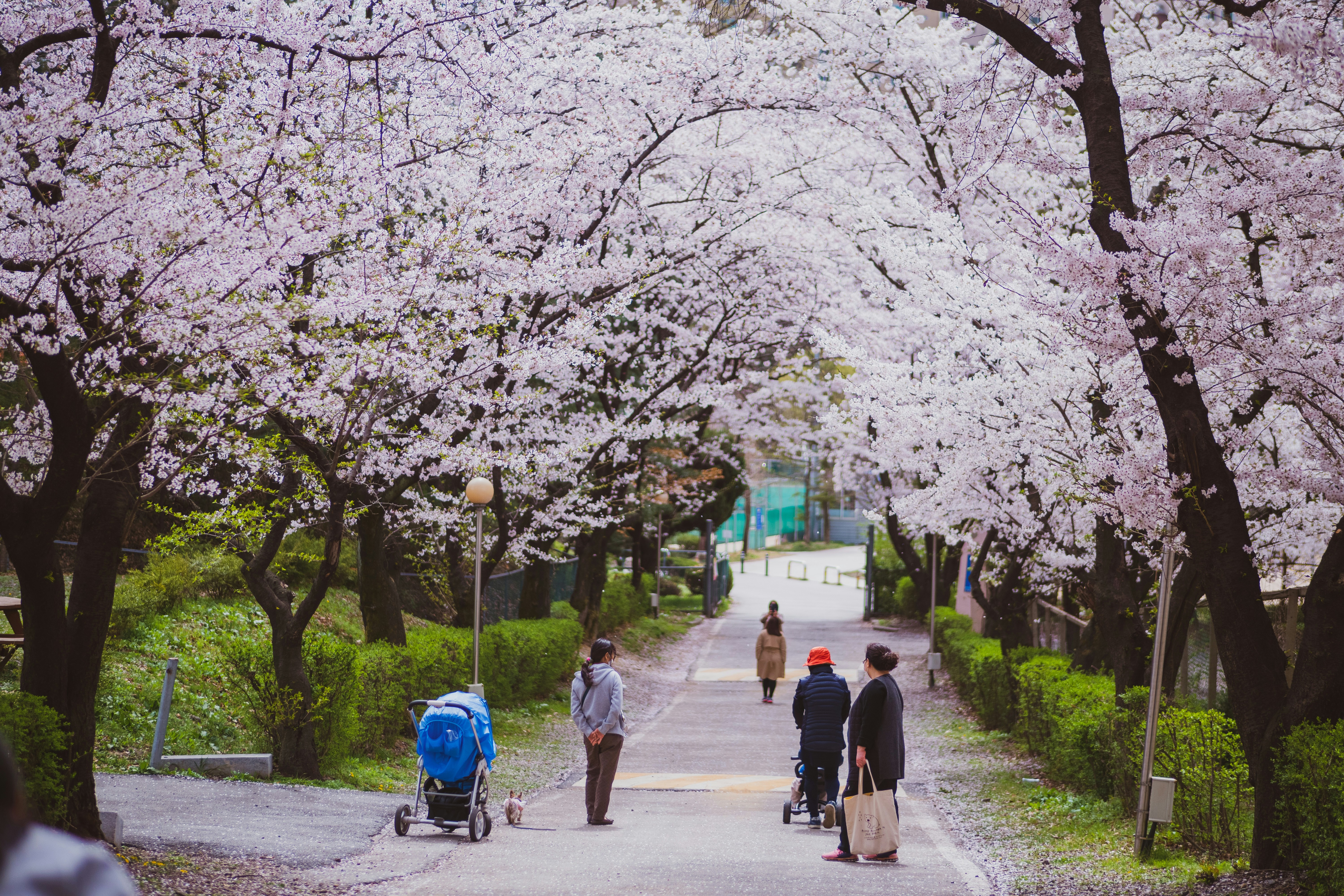
Spring is approaching, potentially affording opportunities for viewing sakura (cherry blossoms) in Japan and South Korea. Although Japan’s sakura is globally recognized, South Korea presents a comparable aesthetic experience and generally offers more budget-friendly options.
Within South Korea, cherry blossoms, referred to as beot-kkot, create extensive floral displays across diverse regions. The blooming period generally commences toward the end of March and extends to mid-April, with localized variations; those located in southernmost areas, such as Jeju, Busan, and Gwangju, typically experience blooms approximately thirty days earlier than regions like Seoul, Incheon, and Andong. The intensity of the blossom period is relatively short, often lasting approximately one to two weeks with peak viewing usually lasting fewer days before petals diminish.
A trip to South Korea during cherry blossom season provides a remarkable experiential element. Activities commonly include attending cherry blossom festivals, or picnic sessions and viewing areas adorned with falling petals.
Applying for a South Korean visa can be accomplished through approved channels. Certain authorized services – including VisaFast – streamline the process, offering potential applicants facilitated guidance regarding requirements and efficient authorization. Consider consulting multiple valid sources prior to the application stage as outlined by governmental protocols concerning immigration.
Optimal Timing for Cherry Blossom Viewing in South Korea
Cherry blossom periods vary significantly across South Korea, influenced by regional climates and geographical locations. Here’s a detailed overview of anticipated bloom times:
Southern Regions (Gyeongju, Suncheon): Bloom typically begins in late March, generally peaking between mid to late March.
Central Regions (Daegu, Busan): Anticipated blossom periods begin around the end of March, reaching their fullest bloom from early to mid-April.
Northern Regions (Seoul, DMZ): Flowering is generally later, commencing in mid-April and culminating in late April to early May. Careful monitoring of specific weather forecasts in these areas is advised.
Southern Korea (Mid to Late March)
- Jeju Island: March 16 – March 23, 2025
As Korea’s southernmost island, Jeju welcomes cherry blossoms the earliest. Head to Jeju National University or Seogwipo’s waterfalls for dreamy pink views.
- Busan: March 23 – March 30, 2025
The coastal city of Busan is stunning during cherry blossom season, especially at Dalmaji Hill, Haeundae, and Oncheoncheon Stream.
- Daegu: March 25 – April 1, 2025
The city’s E-World Theme Park and Apsan Park turn into floral wonderlands.
- Gyeongju: March 24 – March 31, 2025
This historical city offers cherry blossoms along ancient tombs and temples, particularly at Bomun Lake and Cheomseongdae Observatory.
Central Korea (Late March – Early April)
Seoul: April 2 – April 9, 2025 During this period, the city of Seoul experiences peak bloom, typically between early April. Key attractions during this timeframe encompass Yeouido Park, Seokchon Lake, and Namsan Tower.
Incheon: April 4 – April 9, 2025 Cherry blossom season in Incheon coincides with that of Seoul, rendering Grand Park and Jayu Park especially conducive for bloom observation and tourism during the aforementioned dates.
Northern Korea (Early to Mid-April)
- Gangneung: April 5 – April 10, 2025
The coastal city sees slightly later blooms. Visit Gyeongpo Lake for stunning reflections of pink petals on the water.
- Chuncheon: April 7 – April 12, 2025
If you’re visiting later in the season, head to Nami Island or Gongjicheon Park, where cherry blossoms still linger till the end of April.
Top Cherry Blossom Locations in Seoul
Seoul offers a picturesque experience during spring, characterized by abundant pink blossoms making it a favored destination for cherry blossom viewing among prospective visitors. The following provides a selection of recommended locations:
Seokchon Lake
Seokchon Lake, situated in Seoul, offers a spectacular viewing experience for cherry blossom season. Approximately 300,000 cherry trees encircle the lake, and its still waters produce a reflective effect, creating an extraordinary mirror-like scenery.
Location: Songpa-gu, Seoul
Accessible by Public Transportation:
Subway: Utilize Line 2 (Green Line) or Line 8 (Pink Line) and disembark at Jamsil Station (Exits 2 or 10). The lake is reachable on foot following Exit 2 or 10 to a point near to the shore.
Bus: Select from bus routes 301, 341, 360 or 362, descending at Jamsil Station or the designated Seokchon Lake stop.
Yeouido Park
This park is renowned for hosting the annual Yeouido Cherry Blossom Festival, attracting considerable numbers of visitors keen to enjoy walking along the Han River, amidst abundant flowering trees. The event features numerous festival stalls, live entertainment and diverse food vendors, cultivating a vibrant and celebratory ambiance.
Location: Yeouido, Seoul
Transportation Options:
Subway: Board Line 5 (Purple Line) at Yeouinaru Station (Exits 1 or 2). The park is immediately adjacent to the station.
Alternatively, utilise Line 9 (Gold Line) and disembark at National Assembly Station (Exits 1 or 6), subsequently walking for approximately 10 minutes.
Bus: Take bus routes 162, 261, 463, or 662 to reach the Yeouido Park stop.
Namsan Park
Namsan Park, featuring the renowned N Seoul Tower, provides a blend of cherry blossom scenery and expansive city vistas. A scenic walk along the park’s blossom-designated pathways is recommended, and photographic opportunities abound.
Access Information: Located in Jung-gu, Seoul.
Transportation Options:
Subway & Cable Car: From Line 4 (Blue Line) at Myeongdong Station (Exit 3), walk approximately 10 minutes to the Namsan Cable Car Station. Utilize the cable car service to ascend to the peak.
Subway & Bus: Alternatively, travel to Chungmuro Station (Exit 2) via Line 3 or Line 4, then board the Namsan Sunhwan Shuttle Bus (#02, #03, or #05) for a direct route to Namsan Park.
Gyeongbokgung Palace
The aesthetic appeal of this historic palace is enhanced during the cherry blossom season, with vibrant pink flowers complementing its traditional architecture. This is an ideal location for documenting the springtime ambiance within Seoul.
How to Reach? Location: Jongno-gu, Seoul
Via Subway:
Utilize Line 3 (Orange Line), disembarking at Gyeongbokgung Station (Exit 5). This exit provides direct access to the palace entrance.
Alternatively, take Line 5 (Purple Line) to Gwanghwamun Station (Exit 2) and proceed on foot for approximately five minutes.
Via Bus:
- Board bus 1020, 109, 171, 272, or 601 and disembark at the designated Gyeongbokgung Palace stop.
Top Cherry Blossom Viewing Locations on Jeju Island
Jeju Island is renowned for its early blooming cherry blossom season. Prospective visitors to the island seeking to observe the spring bloom can explore the following locations considered prime viewing spots:
This section details key cherry blossom viewing destinations on Jeju Island, highlighting notable locations and opportunities for observation.
Jeonnong-ro Cherry Blossom Street
This renowned location in Jeju City is characterized by a row of impressive King Cherry trees, offering a visually stunning experience, particularly when the blossoms are in full bloom. The large, pale-pink petals create a captivating tunnel effect, making it a popular destination for those seeking a memorable springtime visit.
Location: Jeonnong-ro, Jeju City
Transportation Options:
Taxi: The most convenient option. Travel time from Jeju International Airport is approximately 10–15 minutes, with fares ranging from ₩5,000–₩8,000. From the Jeju Intercity Bus Terminal, the journey is approximately 5 minutes (~₩4,000).
Public Bus: Utilize bus routes 365, 370, or 466 and disembark at the Jeonnong-ro stop. Specifically, when traveling from Jeju Airport, take buses 315 or 316 to Dongmun Rotary, followed by a 5-minute walk.
Walking: Accessible by foot from locations including Dongmun Market and Gwandeokjeong Pavilion, with travel time approximately 10 minutes.
Hallim Park
Hallim Park provides a tranquil environment ideal for visitors interested in nature, encompassing cherry blossoms, diverse gardens, and peaceful ponds. It distinguishes itself with its quieter atmosphere when compared to more crowded urban locations, offering an exclusive and intimate opportunity to view the blooms alongside native Jeju plant life.
Access Information:
Taxi Options:
Journey time from Jeju International Airport is approximately 45–55 minutes, with estimated fares ranging from ₩32,000 – ₩42,000.
Travel duration from Seogwipo is approximately 55–65 minutes (~₩37,000–₩47,000).
Bus Routes:
From Jeju International Airport, utilize bus route 202 heading to Hallim; disembark at the Hallim Park stop (duration: approximately 1 hour 30 minutes). A subsequent 5-minute walk will lead you to the park’s entrance.
From the Jeju Intercity Bus Terminal, take bus route 702 destined for Hallim; alight at the Hallim Park stop (approximate duration: 1 hour). Please note a walk of 5 minutes is required.
Via Rental Automobile:
Motorists can follow 1132 for roughly 41 kilometers, located westward of Jeju City – an estimated drive time is 41 minutes.
Seongsan Ilchulbong (Sunrise Peak)
Notably recognized for its imposing volcanic crater, Seongsan Ilchulbong offers a particularly captivating experience during the flowering season of cherry blossoms. The interplay between these pale pink blossoms and the pronounced, dark cliffs generates a memorable scenic vista.
How to Reach? Location: Seongsan-eup, Jeju
By Taxi:
A taxi journey from Jeju International Airport typically covers a distance of 1 hour 15 minutes and will approximate a fare of ₩50,000 - ₩60,000.
Taxi transport commencing from Seogwipo occupies approximately 1 hour at a cost of approximately ₩40,000.
By Bus:
Journeying from Jeju International Airport: Bus routes 101 or 201 will transport passengers to the Seongsan Ilchulbong stop, estimated to take about 2 hours. A pedestrian walk of 5–10 minutes will then provide access to the site’s entrance.
Departing from the Jeju Intercity Bus Terminal: Route 701 leads to the Seongsan Ilchulbong stop within around 1.5 hours. Subsequent on-foot travel will connect individuals to access the location.
By Rental Car:
- Travel along 1132 Highway in an eastward direction beginning roughly from Jeju City, consuming approximately 1 hour 10 minutes.
Top Cherry Blossom Locations in Gyeongju
Gyeongju, frequently described as a ‘living museum,’ is celebrated for its extensive historical significance and impressive natural surroundings. Throughout the peak of the cherry blossom season, the city presents a remarkable visual display of pink and white blossoms, typically offering a deeply immersive experience. The following identifies key locations within Gyeongju suitable for appreciating cherry blossoms:
Bomun Lake
Bomun Lake in Gyeongju is a highly favoured destination for cherry blossom observation, featuring a wide array of cherry trees. The blossoms’ reflection upon the lake creates an exceptionally pleasing visual, rendering it well-suited for a tranquil walk or exploration.
Getting There: Location: Bomun Tourist Complex, Gyeongju
Via Taxi:
- Travel from Gyeongju Station by taxi, estimated at 15 to 20 minutes with a fare of approximately ₩10,000 – ₩15,000.
- For transportation originating from Singyeongju KTX Station, the journey by taxi is approximately 20 to 25 minutes with an estimated cost of ₩20,000.
Utilizing Public Transport – Bus:
- Departing from Gyeongju Intercity Bus Terminal: Utilize bus routes 10 or 11 towards Bomun Lake. Please disembark at the Bomun Tourist Complex stop, which takes roughly 30 minutes.
- From Singyeongju KTX Station: Enlist bus route 700 for your travel to Bomun Lake, covering an approximate duration of 40 minutes.
Driving – Rental Car:
The route to Bomun Lake from central Gyeongju takes around a 20-minute drive.
Gyeongju National Museum
The museum’s serene grounds offer a compelling combination of historical significance and natural beauty. The presence of cherry trees contrasts noticeably with the region’s ancient artifacts, resulting in a calming and visually appealing environment.
Directions: Location: 186 Iljeong-ro, Gyeongju
Taxi:
- Travel time from Gyeongju Station is approximately 5–10 minutes (approximately ₩5,000 – ₩7,000).
- From Singyeongju KTX Station, the journey typically takes 15–20 minutes (approximately ₩15,000 – ₩20,000).
Bus:
- Accessible via Gyeongju Intercity Bus Terminal: Utilize bus route 10, 11, or 700 proceeding towards Bulguksa Temple. Disembark at the Gyeongju National Museum stop, which takes approximately 10–15 minutes.
Rental Vehicle:
- A short 10-minute drive originating from the downtown portion of Gyeongju; near the Woljeonggyo Bridge and Anapji Pond.
Seongdong Cemetery
This quiet location presents an opportunity for cherry blossom viewing, showcasing blossoming cherry trees situated adjacent to historical gravestones. This blend of historical significance and natural scenery cultivates a tranquil and reflective environment.
Directions: Location: Seongdong-dong, Gyeongju
Taxi Transportation:
- Travel time from Gyeongju Station is approximately 15 minutes (estimated cost: ₩10,000).
- The journey from Singyeongju KTX Station spans approximately 20 minutes (estimated cost: ₩15,000 - ₩18,000).
Public Transportation:
- Options for travelling directly to Seongdong Cemetery using public transport are limited. A taxi or rental vehicle is recommended.
Rental Car Access:
- A short 15-minute drive accessible from central Gyeongju.
Oksan Seowon Confucian Academy
This historically significant Confucian academy is situated amongst a scenic grove of cherry trees, offering a tranquil blend of Korean traditional architecture and the vibrant hues of pink blossoms. The serene environment presents an ideal setting for appreciating the ambiance of springtime.
Directions: Location: Oksan-ri, Angang-eup, Gyeongju
Transportation Options:
Taxi: Journey time from Gyeongju Station is approximately 30–40 minutes (estimated fare: ₩30,000–₩40,000). Taxi travel time from Singyeongju KTX Station is expected to be 40–50 minutes (estimated fare: ₩40,000–₩50,000).
Public Transport: Note that there are currently no direct bus services to Oksan Seowon. A taxi journey from Gyeongju is therefore advised. To utilize public transport, take bus route 50 or 100 from Gyeongju Intercity Bus Terminal to Angang Bus Terminal (approximately 30 minutes). Following this, a taxi transfer to Oksan Seowon will take approximately 10 minutes.
Rental Car: The location is accessible via a 30-minute drive from the heart of Gyeongju, proceeding northward via Highway 904.
Top Cherry Blossom Locations in Busan
Busan, South Korea’s dynamic coastal city, offers exceptional opportunities to view cherry blossoms during the spring season alongside its traditional attractions. As springtime arrives, the city undergoes a significant transformation, frequently displaying impressive blooms across prominent streets, public gardens, and mountainous pathways. Here are some recommended locations for observing cherry blossoms within Busan:
Dalmaji Hill
Designated as Busan’s “Romantic Road,” Dalmaji Hill provides a scenic drive that incorporates blooming cherry blossoms, expansive ocean vistas, and inviting cafés. This visually appealing hillside is particularly stunning when vibrant pink blossoms evoke the effect of a surreal, petal-filled corridor.
Directions & Location: Situated close to Haeundae Beach, Busan.
Via Subway: Employ the Busan Metro Line 2 and disembark at Jangsan Station (Exit 7) or Haeundae Station (Exit 1). Subsequently, utilize a short taxi journey, spanning approximately 5-10 minutes.
By Public Bus: Buses 100, 139, or 200 operate in the vicinity of the hill.
Taxi Transportation: A taxi journey from Haeundae Beach typically takes roughly 5 minutes.
Oncheoncheon Stream
This popular local waterway features a scenic pathway flanked by flowering cherry trees, particularly vibrant during springtime. The area provides opportunities for both walking and cycling along the stream, presenting a tranquil setting to enjoy the landscape underneath the spring bloom.
Access Information: Located near Dongnae and Pusan National University.
Via Subway: Board Busan Metro Line 1 at Dongnae Station (Exits 2 or 4). The stream is approximately a 5-minute walk from the station.
By Bus: Bus routes 100, 110, or 179 offer service proximate to the stream.
Taxi: The stream is approximately a 15-20 minute taxi ride from Haeundae or Seomyeon.
Dalmaji Road, Haeundae
The scenic Dalmaji Road, situated near Haeundae Beach, provides striking ocean vistas alongside areas with cherry blossoms. A walk or drive along this road presents a memorable experience.
Directions:
Via Subway: Proceed to Haeundae Station on Line 2 (Exit 1). A walk approximately 20 minutes uphill is required, or a taxi may be chartered.
Via Bus: Bus Routes 100, 139, or 200 will deposit passengers at the Dalmaji Hill Entrance.
By Taxi: The distance is approximately 5-10 minutes from Haeundae Beach.
Samnak Ecological Park
Situated adjacent to the Nakdong River, this sizable park offers a unique experience for visitors interested in observing cherry blossoms. The park features extensive pathways traversing rich foliage and a significant number of cherry trees typically displaying full bloom, providing a serene environment away from urban activities.
Directions:
Via Subway: Board Busan Metro Line 2 and disembark at Sasang Station (Exit 3). This will necessitate an approximate walk for 15 minutes. Alternatively, a bus service is available.
Via Bus: Bus routes 123, 126, or 138 serve stops in proximity to the park.
Using a Taxi: The park is approximately 15 minutes from Seomyeon or Busan Station.
UN Memorial Cemetery
A unique and meaningful cherry blossom viewing spot, this historical site is lined with beautifully blooming cherry trees, offering a peaceful and reflective atmosphere amidst the floral beauty.
How to reach? Location: Nam-gu, Busan
By Subway: Take Line 2 to Daeyeon Station (Exit 3 or 5), then walk for about 10 minutes.
By Bus: Bus 134, 51, or 68 stops near the entrance.
By Taxi: About 10-15 minutes from Haeundae or Seomyeon.
Weather Conditions in South Korea During Spring and Recommended Attire
Spring represents an ideal time to visit South Korea, characterized by comfortable temperatures, clean air, and vibrant scenery featuring blooming cherry blossoms. This period facilitates extended walks, outdoor leisure activities, and picnics; however, it’s prudent to anticipate potential variations.
March: Temperatures range from 5°C to 14°C (41°F to 57°F). Expect cool mornings and refreshing evenings, necessitating layered clothing options.
April: Temperatures typically fall between 9°C and 18°C (48°F to 64°F), with warmer afternoon conditions suitable for enjoying the blossoming trees. April also presents brief, intermittent rainfall, recommending the possession of a compact umbrella. Furthermore, springtime winds contribute to the accelerated scattering of cherry blossom petals; therefore, timing your visit to coincide with the anticipated peak bloom period is advised to maximize visual effect. Lightweight clothing is generally recommended throughout your South Korean spring trip.
Cherry Blossom Festivals in South Korea (2025): An Overview
For travellers planning a visit to South Korea during the period of peak cherry blossom bloom, several notable festivals are taking place throughout the country. These festivals showcase the beauty of the blossoms and offer various cultural experiences to attendees.
1. Jinhae Gunhangje Festival
Dates: March 25 – April 3, 2025 (Tentative)
Location: Jinhae-gu, Changwon
Why Go? This is Korea’s biggest and most famous cherry blossom festival, drawing millions of visitors each year. Wander along the fairytale-like Yeojwacheon Stream and snap dreamy photos at Gyeonghwa Station, where cherry blossoms arch over old train tracks.
Note: You can easily plan a day trip to Jinhae from Seoul and enjoy the festival.
2. Yeouido Spring Flower Festival
Dates: April 1 – April 15, 2025 (Subject to Change)
Location: Yeouiseo-ro Street, Yeouido, Seoul
Reasons to Attend: The festival features a 1.7 kilometer pathway decorated with approximately 1,800 cherry trees situated along the Han River. The event also encompasses cultural performances, various street food vendors, and incorporates an illumination display, providing attendees with a renowned Spring experience in Seoul.
3. Seokchon Lake Cherry Blossom Festival
Dates: April 1 – April 10, 2025 (Tentative)
Location: Seokchon Lake, Songpa-gu, Seoul
Why Go? A scenic lakeside loop surrounded by cherry blossoms, plus photo exhibitions, cultural performances, and local food stalls—perfect for a relaxed afternoon in Seoul.
4. Gyeongju Cherry Blossom Marathon
Date: April 6, 2025 (Tentative)
Location: Gyeongju
Why Go? Ever dreamed of running beneath a canopy of pink petals? Whether you’re a pro or a casual jogger, this marathon offers various race categories, letting you experience the historic charm of Gyeongju while surrounded by blossoms.
5. Jeju Cherry Blossom Festival
Period: March 22 – March 24, 2025 (Subject to Change)
Area: Jeonnong-ro and adjacent areas within Jeju City.
Reason for Attendance: Jeju Island is renowned for its ‘King Cherry Blossoms,’ distinguished by significantly large petals and vibrant pink coloration. The festival encompasses conventional displays, local cuisine offerings, and opportunities for sightseeing along roads decorated with blossoming trees.
6. Hwagae Cherry Blossom Festival
Dates: March 29 – April 7, 2025 (Tentative)
Location: Hwagae, Hadong County
Why Go? Walk the famous “10-ri Cherry Blossom Road” (Wedding Road), a 4km tunnel of dreamy blossoms. According to local legend, couples who walk this path together will marry and stay in love forever.
7. Gyeongpo Cherry Blossom Festival
Dates: April 1 – April 7, 2025 (Tentative)
Location: Gyeongpo Lake, Gangneung
Why Go? A lakeside cherry blossom experience, complete with traditional performances, local food stalls, and the sound of waves crashing nearby, Gangneung’s coastal beauty meets springtime magic.
8. Jecheon Cherry Blossom Festival at Cheongpung Lake
Event Dates: April 5 – April 13, 2025 (Subject to change)
Location: Cheongpung Lake, Jecheon
Description: The Jecheon Cheongpung Cherry Blossom Festival offers an opportunity to experience blooming cherry blossoms combined with scenic lake vistas and traditional cultural performances. Activities include boating excursions, opportunities to enjoy regional culinary offerings, and the visualization of pink cherry blossom reflections on the lake’s surface.
9. Namsan Cherry Blossom Festival
Schedule: April 3rd through April 10th, 2025 (Subject to Change).
Location: Namsan Park, Seoul.
Reasons for Visiting: Namsan Park is a renowned cherry blossom destination in Seoul, offering expansive city views. The festival typically includes cultural performances and evening illumination events, frequently favored by visitors seeking an idyllic spring experience.
10. Incheon Jayu Park Cherry Blossom Festival
Dates: April 5 – April 12, 2025 (Tentative)
Location: Jayu Park, Incheon
Why Go? This historic Western-style park offers cherry blossoms, Korean War memorials, and cultural performances, blending nature and history.
Accommodation Options in Seoul During Cherry Blossom Season
Seoul provides a range of lodging choices suited to diverse budgets and travel preferences, simplifying the process of finding suitable accommodations during cherry blossom season. Options span from high-end hotels offering riverfront vistas, to more affordable stays within proximity to key blossom viewing areas, and budget-conscious hostels situated in popular districts.
- Luxury Accommodation: Conrad Seoul
The Conrad Seoul represents an ideal choice for individuals seeking a premium experience in conjunction with cherry blossom season. Situated within Yeouido, the core location of the Yeouido Cherry Blossom Festival, this five-star hotel provides exceptional river views and captures panoramic city vistas. This prime location ensures readily convenient access to Yeouido Park, optimizing visitors’ ability to observe the festival directly.
Address: 10 Gukjegeumyung-ro, Yeouido, Seoul Ideal For: Tourists desiring luxury, riverside scenery, and uncomplicated positioning adjacent to the key festival celebrations. Nearest Cherry Blossom Site: Yeouido Park
- Mid-Range Accommodation: Lotte Hotel World
The Lotte Hotel World delivers a pleasing fusion of comfort alongside contemporary flair – an attractive mid-range proposition. Conveniently established near Seokchon Lake, one of Seoul’s particularly favored bloom appreciating localities, guests are effectively positioned. Initial experiences are markedly enhanced, benefitting from a serene early morning walk along the adjacent shorelines, creating photogenic glimpses reflecting within reflections, primarily around water during daytime illumination..
Moreover, positioned beside its convenient inclusion within Jamsil Subway Station enables accessibility facilitating comprehensive investigation of broader range seasonal celebrations.
Address: 240 Olympic-ro, Jamsil, Seoul Best For: Families, couples, and pilgrims desiring tranquil comfort plus practical ease surrounding transit locations Nearest Cherry Blossom Venue: Seokchon Lake
- Budget Accommodation: G Guesthouse Itaewon
For those prioritized value whilst retaining contentment, ‘G Guesthouse Itaewon’ is decidedly recommended. This cosy residence located in a stimulating Itaewon-related area, characterized by lively diversity which includes distinctive international selections which subsequently translates into easily manageable journey patterns reaching primary destinations showcasing celebrated floral seasons amongst cities offering optimum travel arrangements offering comfort including efficient locations which serve tourism sectors and facilitate visits alongside significant celebrations of visual events showcasing cultural richness around Korea’s tourism.
Address: 14-38 Bogwang-ro, Itaewon, Seoul Most Suitable: Value oriented travelers as well as solo adventurers considering more affordable itineraries incorporating tourism activities
Cherry Blossom Accommodation Options on Jeju Island
Jeju Island presents a compelling destination within South Korea for observing cherry blossoms due to its favorable climate and varied scenic vistas. Options range from opulent seaside resorts to cost-effective accommodations, catering to diverse budget preferences.
- Luxury Accommodation: Lotte Hotel Jeju
For a premium, lavish experience, Lotte Hotel Jeju is recommended. This five-star resort, situated within the Jungmun Tourist Complex, encompasses impressive ocean views and expansive gardens anticipated to be abundant with cherry blossoms during springtime. Proximity facilitates access to prominent cherry blossom viewing areas including Jeonnong-ro Cherry Blossom Street and Seogwipo’s Downtown Blossoms.
Address: 35 Jungmungwangwang-ro 72beon-gil, Seogwipo, Jeju Suitable for: Luxury travellers, honeymooners, and those seeking an oceanfront escape with prominent cherry blossom locations nearby. Proximity: Jeonnong-ro Cherry Blossom Street
- Mid-Range Accommodation: Hotel Regent Marine The Blue
Hotel Regent Marine The Blue delivers a comfortable mid-range decision for travelers desiring an equilibrium between affordability and amenities. Strategically positioned near Jeju’s Dongmun Market and the picturesque Tapdong Seaside, this establishment furnishes easy access to notable cherry blossom locales alongside present-day conveniences and inviting guest rooms. Further facilitating access are esteemed cherry blossom destinations incorporating Jeonnong-ro and the Halla Arboretum.
Address: 20 Seobudu 2-gil, Jeju City, Jeju Most Appropriate For: Couples, families and travelers striving for tranquil respite in proximity to urban amenities and favoured spring cherry blossom locales. Proximity: Jeonnong-ro Cherry Blossom Street
- Budget Friendly Accommodation: Greenday Guesthouse
Choosing the Greenday Guesthouse represents a fiscally sensible option for experiencing Jeju’s seasonal blooms while closely adhering to budgetary considerations. Residing in Jeju City, this comfortably-appointed guesthouse consists of cost-conscious dormitory and exclusive residences distinguished by a welcoming home atmosphere. Passenger transport is readily accessible for travellers interested in enjoying regional gems at the nearby halls of attractions consisting of Halla Arboretum and Seogwipo’s Blossom Trails.
Address: 22 Samseong-ro, Jeju City, Jeju Conducive for: Travelers prioritizing economical travel, solo explorers, and backpacking excursions interested in local spring foliage displays. Proximity: Jeonnong-ro Cherry Blossom Street
Accommodation Recommendations for Cherry Blossom Season in Busan
Busan presents numerous lodging options to capitalize on the city’s captivating cherry blossom displays. Options range from premium beachfront hotels to convenient mid-range accommodations and economical guesthouses, ensuring an appealing experience for every type of traveller.
- Luxury Accommodation: Park Hyatt Busan
The Park Hyatt Busan offers refined rooms featuring exceptional panoramic ocean views ideal for travellers desiring a superior leisure experience. Situated near Dalmaji Hill, a prominent cherry blossom viewing site in Busan, the hotel provides the ideal locale for a luxurious springtime vacation.
Address: 51 Marine City 1-ro, Haeundae-gu, Busan Suitable for: Discerning travellers, honeymooners, and individuals seeking oceanic comfort. Nearby Cherry Blossom Location: Dalmaji Hill
- Mid-Range Accommodation: Haeundae Grand Hotel
The Haeundae Grand Hotel provides a satisfactory and cost-effective stay for those desiring convenience and comfortable arrangements. Its strategically advantageous location facilitates exploring Busan’s favored cherry blossom regions, including Oncheoncheon Stream and Dalmaji Hill. The hotel is also enveloped by a selection of dining outlets and cafe establishments, promoting relaxation following a day dedicated to sightseeing.
Address: 217 Haeundaehaebyeon-ro, Haeundae-gu, Busan Ideal for: Families, pairs, and travelers favoring comfortable positioning near the coastline. Nearby Cherry Blossom Location: Oncheoncheon Stream
- Budget Accommodation: Kimchee Busan Guesthouse
The Kimchee Busan Guesthouse offers exceptionally economical dormitory and private lodging, combined with a welcoming ambience catering to budget-conscious voyagers. Located in Seomyeon, the guesthouse capitalizes on its robust transport connectivity providing straightforward access to notable cherry blossom points of interest throughout Busan such as Oncheoncheon Stream. The guesthouse’s relatively minimal proximity enables visitors to effortlessly see the exceptional displays taking place across some of most cherished bloom viewing areas around Busan.
Address: 20-8, Hwangnyeong-daero 7beon-gil, Busanjin-gu, Busan Suitable for: Individuals with limited budgets, solo explorers, and backpack carriers/ travellers Nearby Cherry Blossom Location: Oncheoncheon Stream
Accommodation Options in Gyeongju for Cherry Blossom Viewing
Gyeongju presents various lodging choices, encompassing opulent hanok accommodations alongside more economical guesthouses.
- Luxury Accommodation: Hilton Gyeongju
For a sophisticated experience, the Hilton Gyeongju offers lakeside vistas and high-end suites. Strategically situated in proximity to the acclaimed Bulguksa Temple and the scenic Bomun Lake, this hotel delivers a peaceful environment complemented by globally recognized services.
Address: 484-7 Bomun-ro, Gyeongju
Suitable for: High-end travellers, family groups, and pairs pursuing a tranquil escape
Proximity to Cherry Blossom Sites: Bomun Lake
- Mid-Range Accommodation: Gyeongju GG Tourist Hotel
A reliable mid-range alternative, the Gyeongju GG Tourist Hotel facilitates access featuring modern facilities close to Donggung Palace and Wolji Pond. This property is renowned for accommodating comfortable rooms, encompassing a fitness centre and facilitating complimentary vehicle parking.
Address: 391 Wonhwa-ro, Gyeongju
Ideal for: Couples, familial groups, and individuals wanting a balance between historical interest and a preference for natural landscapes
Nearby Cherry Blossom Sites: Donggung Palace and Wolji Pond
- Budget Accommodation: Blueboat Hostel Gyeongju
Blueboat Hostel Gyeongju is a cost-effective selection designed for guests with limited budgets and a range of convenient amenities. This hostel is conveniently based in the city area and provides standard shared dormitory rooms, combined with a shared kitchen facility designed within a beneficial social atmosphere . Guests can readily navigate public transit systems leading easily to famous cherry blossom viewing location of Bomun Lake, also Heungmu Park can easily be reached by public transport networks.
Address: 125-2 Hwango-dong, Gyeongju
Most suitable for: Individuals choosing limited budgets, independent adventurers, and backpackers seeking communal lodging
Close access points to key attraction areas involving cherry blossom sites such as: Bomun Lake
10-Day Cherry Blossom in South Korea: A Complete Itinerary
Day 1: Arrival in Seoul
Upon arrival at Incheon International Airport, transportation will be provided to Seoul (approximately one hour from the airport). Following arrival, you will be allocated time to transfer to your designated lodging. An optional evening excursion is available, including a walk through the Myeongdong or Insadong districts to observe the local community and sample available street food options.
Key Destinations for Exploration:
- Myeongdong Night Market – Sample various Korean street food offerings, including tteokbokki, hotteok, and Korean fried chicken.
- Cheonggyecheon Stream – Consider a relaxing evening stroll along this urban waterway.
- Namsan Tower (N Seoul Tower) – Observe panoramic views of the city during nighttime hours.
Where to Eat:
Myeongdong Kyoja – Handmade knife-cut noodles and dumplings.
Gwangjang Market – Try bindaetteok (mung bean pancakes) and mayak gimbap.
Day 2: Seoul Immersion – Historical Sites & Traditional Districts
This day focuses on experiencing Seoul’s significant historical and cultural landmarks.
Your itinerary includes a visit to Gyeongbokgung Palace, noting the schedule of the royal guard’s changing ceremony, then an exploration of Bukchon Hanok Village, comprised of conventional Korean houses, followed by discovering Insadong, recognized as a popular location for artwork, cultural experiences, and traditional tea establishments.
Recommended Locations for Your Trip:
Gyeongbokgung Palace: It is advisable to plan your visit for the early morning hours to minimize crowding.
Bukchon Hanok Village: Characterized by exceptionally well-maintained traditional Korean houses (hanoks), offering a tranquil atmosphere for exploration.
Insadong: A prime destination for discovering a wide selection of traditional artistry, art galleries, and local tea establishments.
Recommended Dining Options:
Tosokchon Samgyetang – Renowned for its ginseng chicken soup offering.
O’sulloc Tea House – Features a variety of desserts and beverages utilizing green tea.
Day 3: Excursion to Nami Island & Petite France – An Immerse Experience
This day entails a visit to Nami Island, a notably attractive destination recognized for its distinct tree-lined pathways. These pathways are renowned for their potential to transition into spaces offering panoramic cherry blossom vistas during the spring season. Travel to the island may be facilitated by ferry transport. Potentially, participants may select the opportunity to participate in zipline activities if desired.
Subsequently, travellers will be directed to Petite France, a visually appealing European-inspired settlement, characteristic with vibrant colour schemes and unique building design. The settlement’s attributes provide ideal subjects for photograph records.
Key Destinations to Visit:
- Nami Island – Offers opportunities to observe cherry blossoms and features tranquil lakeside paths.
- Petite France – Presents a charming, French-style settlement characterized by scenic vistas.
Dining Recommendations:
- Dongmoon Restaurant (Nami Island) – Offers Korean barbecue.
- Petite France Café – Provides coffee and seating overlooking the landscape.
Day 4: Travel to Jeju Island – Natural Attractions
Travel to Jeju Island, characterized by its volcanic terrain, waterfalls, and extensive coastlines. Following arrival, consign luggage with the designated hotel before embarking on a guided hike to Seongsan Ilchulbong, a significant volcanic cone. Subsequently, explore the remarkable coastal cliffscapes of Seopjikoji.
Key Destinations for Exploration:
- Seongsan Ilchulbong – A notable area renowned for hiking opportunities.
- Seopjikoji – Characterized by notable coastal cliffs and scenic vistas.
Dining Recommendations:
- Gogung – This establishment is renowned for its Jeju black pork, which is highly recommended.
- Donsadon – Popular for experiencing authentic Korean barbecue.
Day 5: Examination of Jeju Island – Volcanic Formations and Coastal Water Features
Explore the geological significance of Jeju Island through a visit to the Manjanggul Lava Tube, recognized as an extensive lava tunnel with recorded lengths. Subsequently, observe the dramatic Jeongbang Waterfall, uniquely positioned as a waterfall projecting directly into the marine environment.
Key Destinations for Exploration:
- Manjanggul Lava Tube – Explore a significant natural volcanic tunnel system.
- Jeongbang Waterfall – Observe a distinctive cascade plunging directly into the ocean.
- Oedolgae Rock – Examine a noteworthy coastal geological formation.
Recommended Dining Options:
- Haeundae Ssambap – Offers authentic Korean cuisine featuring a selection of fresh seafood dishes.
- Ujin Haejangguk – This establishment is specifically known for serving abalone porridge.
Day 6: Travel from Jeju to Busan – Coastal Exploration
Upon arrival, transfer to Busan, a significant coastal city in South Korea. Spend the day relaxing on Haeundae Beach, well-known for its sandy shores and marine environment. Subsequently, explore Dongbaekseom Island, utilising established coastal pathways providing panoramic views of the coastline. Observing the sunset from this location is recommended.
Key Destinations for Exploration:
Haeundae Beach – This is Korea’s most recognized beach.
Dongbaekseom Island – Offers coastal paths with natural landscapes and oceanic vistas.
Recommended Dining Options:
- Suminine – A Busan favorite offering grilled eel, a regional specialty.
- Haeundae Seafood Market – Features a selection of fresh seafood including grilled octopus and butter garlic squid.
Day 7: Exploration of Busan – Diverse Cultural Experiences
This day focuses on exploring Busan, commencing with a visit to Gamcheon Culture Village, recognized for its distinctive murals and network of staircases. Subsequently, attendees will visit Jagalchi Fish Market, Korea’s primary marine marketplace. The itinerary culminates with a trip to BIFF Square, a concentrated area comprising diverse food vendors and popular entertainment options.
Key Areas for Exploration:
Gamcheon Culture Village – Characterized by its vibrant, artistic atmosphere.
Jagalchi Fish Market – A prominent destination for individuals interested in exploring Busan’s seafood offerings.
BIFF Square – A notable location to experience Busan’s celebrated hotteok (sweet pancakes).
Where to Eat:
Geumsubokguk – Pufferfish soup, a Busan speciality.
Halmae Gukbap – Traditional pork rice soup.
Day 8: Excursion to Gyeongju – The Historical Capital
Schedule a day trip to Gyeongju, a city recognized by UNESCO as a historical site of significance. Planned visits include the renowned Bulguksa Temple, a prominent Buddhist temple, and Anapji Pond, featuring reflections of cherry blossoms within the water.
Key Sites for Visitation:
- Bulguksa Temple – Recognised for its significant contributions to Buddhist architectural design.
- Seokguram Grotto – Characterised by a historic cave that houses a substantial Buddha sculpture.
- Anapji Pond – Noted as a prominent location for viewing cherry blossoms.
Recommended Dining Options:
Dosol Maeul – Offers authentic Korean set meals reflecting traditional recipes.
Yosokkoong – This establishment is recognized for providing Gyeongju-style hanjeongsik (a full Korean meal).
Day 9: Departure from Seoul
Utilize the KTX to return to Seoul for concluding sightseeing opportunities, including retail activities or visits to cafes. An optional visit to Seoul Forest for experiencing natural surroundings is also available.
Further Investigation Points:
- Hongdae – Offers a diverse selection of boutiques, cafes, and live street performances.
- COEX Mall – Includes the well-known Starfield Library.
Day 10: DMZ Tour – Examining the Korean Division
This tour provides an opportunity to explore the historical context of both North and South Korea, alongside a direct examination of the circumstances leading to the Korean division. Participants will embark on a guided journey to the Demilitarized Zone (DMZ) designed to illuminate the pivotal events within Korea’s divided history.
Key Locations for Observation:
- Imjingak Park – This park serves as a memorial, commemorating the families affected by the Korean War.
- Third Tunnel of Aggression – The Third Tunnel represents a significant covert structure constructed by North Korea.
Day 11: Departure from Seoul
This 11-day itinerary is designed for applicants seeking to experience the renowned cherry blossom season in South Korea, incorporating exploration of the nation’s prominent urban areas, significant historical sites, and coastal regions. The schedule provides an opportunity to witness this natural phenomenon’s extraordinary beauty alongside engagement with South Korea’s diverse cultural offerings.
Things to know before heading to South Korea during cherry blossom season
There’s something almost poetic about watching delicate pink petals swirl through the air in South Korea during cherry blossom season. If you’re dreaming of this magical sight, you’re not alone. Spring is one of the busiest travel seasons in the country! But now that you know where to witness the blossoms, the best places to stay, and the details of the festivals, it’s time to manifest the trip. With the right planning, you can experience the best of it without the crowds ruining the moment.
Prioritize Advance Reservations
It is crucial to make all bookings in advance, specifically concerning accommodations, KTX train tickets, and restaurant reservations, due to high demand periods such as during the cherry blossom season. When planning intercity travel, securing KTX train seats well in advance minimizes the potential for unavailable seating at the last minute.
Plan your visit strategically
South Korea is known for its early morning culture, and to maximize your experience viewing cherry blossoms while minimizing crowds, we recommend focusing your visit on significant locations prior to 9:00 AM. During peak hours, which typically extend to midday, these locations often experience substantial tourist and local concentrations.
Prepare for Variable Weather Conditions
Spring weather in South Korea is known for its fluctuations. It is common to experience cool mornings transitioning to warmer temperatures in the afternoons. Therefore, layering your clothing is advised. Furthermore, cherry blossoms are vulnerable; a gust of wind or unexpected rainfall may cause them to fall prematurely. If you observe forecast predictions of peak bloom, it is recommended to visit immediately to observe their beauty, as the bloom period can be brief and sensitive to environmental conditions.
Recommended Seasonal Street Foods During Cherry Blossom Season
During the cherry blossom season, numerous locations host seasonal events, offering an opportunity to sample regional delicacies. Key food items commonly available include:
Cherry Blossom Hotteok – This variation of the traditional sweet pancake is a popular seasonal treat.
Strawberry Soju – Capitalizing on Korea’s strawberry harvest, strawberry soju is a refreshing seasonal beverage.
Sakura-Flavored Confections – A diverse array of Sakura-infused desserts, ranging from lattes to ice cream, are readily available.
Strawberry Bingsu – Offers shaved ice with fresh strawberries and condensed milk, presenting a beloved dessert choice.
Strawberry Sandwiches – A light sandwich incorporating whipped cream and fresh strawberries, well-suited for outdoor gatherings.
Cherry Blossom Makgeolli – This distinctly-flavored rice wine harmonizes effectively with Korean specialties and sweet pastries.
Jindallae Hwajeon – Representing South Korean culinary ingenuity and incorporating ediable azaleas
Gyeranppang – Offers warming eggbread ideal on crisp spring mornings
The prime locales for experiencing authentic neighborhood cuisine within Seoul are comprised of: Myeongdong, Hongdae, Gwangjang Market, Insadong, and Namdaemun Market.
Discover Korea’s Diverse Spring Experiences
Although observing cherry blossoms is a notable experience, applicants should consider engaging with a broader selection of Korean spring attractions. Prospective visitors may explore tea gardens in Boseong, investigate traditional hanok settlements, or attend a K-pop performance – which are frequently scheduled during this period.
Ready to add some glam to your ‘gram?
Cherry blossoms don’t last long, and that’s what makes them so special. Take as many photos as you want, but don’t forget to put the camera away and simply enjoy the sight of petals floating around you. That’s where the real magic is!
What is the best way to get around South Korea?
South Korea offers a robust transport infrastructure. Metropolitan areas, including Seoul and Busan, are most efficiently accessed via the subway network. For rapid intercity travel, the KTX high-speed rail service provides an effective solution. Additionally, taxis, available through services such as Uber and Kakao T, and public bus systems remain readily available for passenger convenience.
Is South Korea expensive for tourists?
South Korea offers a range of travel experiences, from economical options to premium excursions, contingent upon individual spending preferences. Local cuisine and public transport represent cost-effective choices; however, expenditures associated with luxury dining, retail purchases, and upscale lodging can be substantial. Travelers seeking a more economical trip can readily manage their budgets by opting for hostel accommodations and exploring local restaurants.
Is it easy to communicate in English in South Korea?
The provision of English language support differs across South Korea. Although English language instruction is present in educational settings, the level of proficiency varies significantly among the population. In metropolitan areas such as Seoul and Busan, English language signage and menus are commonly encountered. It is recommended that applicants familiarize themselves with fundamental Korean phrases to facilitate smoother interactions during their stay.
What to shop in South Korea?
South Korea is a shopping paradise, offering everything from skincare to traditional souvenirs. Here are some must-buy items:
1. Korean Beauty & Skincare Products
- Popular brands include Innisfree, Laneige, Etude House, and COSRX.
- Retail locations consist of Myeongdong, Olive Young, and designated duty-free shops.
2. Korean Fashion & Accessories
- Availability includes contemporary clothing, footwear, and handbags sourced from domestic designers.
- Common retail locations encompass Hongdae, Dongdaemun, and Gangnam districts.
3. K-Pop & K-Drama Merchandise
Albums, posters, lightsticks, and fan goods
Where to buy: Myeongdong Underground Shopping Center, SMTOWN & stores near entertainment agencies
4. Traditional Korean Souvenirs
Common Korean souvenirs include Hanbok, Korean ceramics, handmade fans, and embroidery.
These items may typically be acquired from locations such as Insadong and Bukchon Hanok Village.
5. Korean Food & Beverage Items
- Includes items such as honey butter chips, Korean ramen, seaweed snacks, and various flavored soju options.
- Available for purchase at retail locations including Lotte Mart, GS25, and CU.