
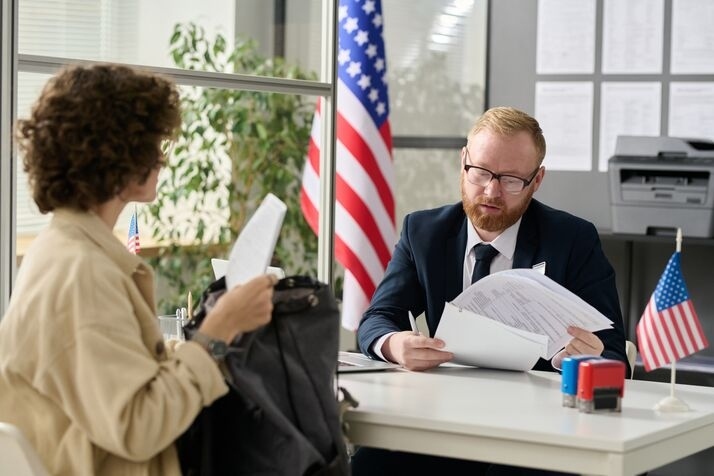
For many travellers, the US B1/B2 visa interview is one of the most stressful steps in the visa application process. Whether you’re planning a short family vacation, attending a business meeting, or exploring the cultural richness of the United States, sitting across from a consular officer can feel intimidating. The uncertainty of what questions you’ll be asked often leads to anxiety, hesitation, or nervous responses.
But here’s the good news: the interview doesn’t have to be overwhelming if you know what to expect. Consular officers generally ask a standard set of questions designed to verify your travel intent, financial stability, ties to your home country, and compliance with US visa rules. By preparing for these common questions in advance, you can walk into the interview with confidence, clarity, and peace of mind.
In this blog, we’ll cover:
The most frequently asked US B1/B2 visa interview questions.
Understanding the U.S. B1/B2 visa interview process.
Practical tips for answering confidently and truthfully.
Whether it’s your first visa interview or you’ve applied before, this guide will give you valuable insights into the process. From questions about your travel plans and accommodation to inquiries about your finances and previous travel history, we’ll walk you through what really matters to the officer behind the counter.
1. Potential Questions During a U.S. B1/B2 Visa Interview
Purpose of Travel and Trip Details:
Please specify the precise reason for your visit to the United States.
Could you outline the factors that led you to select the US over other potential destinations?
Do you anticipate participating in any events, conferences, or trade shows while in the US?
Is your visit primarily for tourism, business, or a combination of both?
Do you intend to travel to multiple cities within the US? If so, please list the specific locations.
Is there a comprehensive travel itinerary you can provide?
Do you have any personal or professional connections within the United States?
Do you plan to return to the US at any point in the future? If so, what are the reasons for your intended return?
Do you intend to participate in any courses, workshops, or training programs during your visit?
Are you seeking medical treatment? If so, please detail the specific treatment and the location of the medical facility.
Proposed Trip Duration and Logistics:
What is the anticipated duration of your visit to the United States?
Please outline the factors considered in determining the length of your intended stay.
What is the planned date of your return to your country of residence?
What measures will be implemented to guarantee your departure from the United States prior to the expiration of your visa?
Have your flight tickets been secured?
Do you possess valid travel insurance coverage?
Please identify the individual responsible for arranging your travel itinerary.
Do you intend to visit any other countries during your travel period, either before or after your visit to the US?
Could you specify the precise location of your accommodation within the United States? (e.g., hotel, Airbnb, or residence with family/friends?)
Can you furnish the complete postal address of your accommodation?
Which party covered the cost of your flight tickets?
Business (if applicable):
What kind of business meetings will you attend?
Who invited you to the US for business purposes?
What is the name of the company you will visit?
What is your relationship with this company?
How long have you been working with them?
Will you sign any contracts in the US?
Are you being paid by a US company for your visit?
Will you be attending a trade fair, seminar, or conference? If yes, which one?
Do you need to meet any business partners or clients in the US?
Family, Friends & Relatives:
Do you possess relatives residing in the United States?
Please specify the immigration status of these individuals, including whether they are citizens, green card holders, students, or individuals holding work visas.
Do you intend to reside with these relatives in the US?
What is the duration of time these relatives have been established residents of the United States?
Do you have any dependents, such as children, who are currently enrolled in educational programs or employed within the US?
Do you anticipate undertaking visits to the US to connect with friends?
How frequently do you maintain communication with these individuals?
Have any members of your family submitted applications for immigration to the United States?
Are you planning to attend events such as weddings, graduations, or family gatherings within the US?
Financial Verification:
What is the total amount of currency you possess for your intended travel duration?
Is a recent bank statement available to substantiate your financial resources?
What is the estimated total cost of your trip to the United States?
Please detail the method by which you will cover the expenses of your stay.
Do you require financial support from any individual during your visit?
Do you own any real estate or other assets within your country of residence?
What is your regular monthly income?
Do you currently remit income tax payments?
Can you submit documentation demonstrating your established financial standing?
Employment and Professional History:
Please detail your current occupation.
What is the duration of your employment in your present role?
What is your specific job title and functional role?
Could you outline your typical daily work responsibilities?
Please identify the name of your employer.
What is the length of your tenure with your current employer?
Do you possess a formal letter of leave approval from your employer?
If applicable, how many employees are directly supervised by you (in a senior position)?
Please describe your previous employment.
Have you experienced any extended periods of unemployment?
Do you operate your own business? If so, what is the nature of your business?
Ties to Home Country (Return Assurance):
Why will you return to your home country after your visit?
What family responsibilities do you have in your home country?
Do you own a house, land, or business in your country?
Do you have dependents relying on you (children, spouse, parents)?
Are you involved in any ongoing work projects?
Do you have a permanent job you will return to?
How do you guarantee that you won’t overstay in the US?
Relevant Legal and Immigration History
Has a U.S. visa application previously been denied for you?
Have you previously been deported from the United States or any other country?
Are there any active immigration petitions currently pending in the United States?
Have you previously exceeded the authorized duration of a visa stay in the U.S. or internationally?
Have you ever been found to have contravened the terms and conditions of a visa in any nation?
Have you previously submitted an application for asylum or pursued immigration benefits within the U.S.?
Do you possess a criminal record within your country of citizenship or in any foreign jurisdiction?
Have you ever been subject to arrest proceedings for any reason?
Previous Travel History:
Have you ever traveled to other countries? Which ones?
What was the purpose of those trips?
Did you always return on time from your past trips?
Do you have valid visas from other countries?
Was your passport ever lost or stolen?
Have you ever extended your stay in another country?
Education Background (if relevant):
Where did you complete your education?
What degrees or qualifications do you hold?
Are you currently studying anywhere?
Do you plan to pursue studies in the US in the future?
Frequently Asked Questions:
- Please explain the reasons for your visa application approval.
- What is your level of English proficiency?
- Which individual completed your visa application?
- Did you engage a visa consultant or agent in preparing your application?
- Are you familiar with the rights and responsibilities of a visitor in the United States?
- Are you aware of the limitations associated with a B1/B2 visitor visa?
- What actions will you take if your visa application is denied?
- What period of leave has your employer approved for your travel?
- Do you possess adequate medical insurance coverage for your intended stay in the US?
- Should your trip necessitate an extension, what steps will you undertake?
You can download this PDF containing this complete list of questions and recommended preparation materials prior to your US B1/B2 visa interview.
Refer to our YouTube video for a visual representation of common visa interview questions and anticipated responses relating to a B1/B2 visa application.
2. Understanding the US B1/B2 visa interview process
In 2023, the US government issued over 10 million non-immigrant visas, with B1/B2 visas making up a significant portion. Due to their high volume, the interview process for these visas tends to be one of the fastest.
What’s important to note is that B1/B2 visas do not have specific travel purposes assigned to them, so the visa officer’s focus is on evaluating you as an individual and your overall eligibility for the visa.
3. Common US B1/B2 visa interview questions and answers
Next, we’ll discuss each US B1/B2 visa interview question and give you helpful tips on how to answer them:
Intended Purpose of Travel
1. What is the purpose of your visit to the United States?
The B1/B2 visa applies to temporary business activities (B1) and short-term visits for tourism or leisure (B2). The consular officer will assess your visit to ensure it aligns with these permitted categories and does not involve unauthorized employment, academic pursuits, or applications for permanent residency.
Guidance for your response:
- Provide a precise and detailed explanation of your intended activities.
- If travelling for business, specify the precise meetings, conferences, or seminars you plan to attend.
- For tourism purposes, detail the cities or attractions included in your planned itinerary.
- Supporting documentation, such as a detailed itinerary or an invitation letter, can provide added assurance regarding the legitimacy of your visit.
2. How long do you plan to stay in the US?
Your response indicates whether your stay aligns with your stated purpose. An unusually long stay for a short event may raise doubts about your intentions.
How to answer:
State the exact number of days or weeks.
Make sure your answer matches your flight bookings, hotel reservations, or event dates.
3. Why are you planning to stay in the country for this duration?
The officer will assess the justification for your intended length of stay to determine its appropriateness for the stated purpose.
Guidance for Responding:
For tourism purposes, articulate that the proposed duration will adequately facilitate the completion of your planned itinerary.
For business-related visits, detail scheduled meetings, training programs, or conferences.
Provide concrete justifications, focusing on specific, time-limited activities rather than generalized statements.
4. Why have you chosen this particular time to travel to the US?
This question is assessed to determine the rationale for your proposed travel dates.
Suggested Response Structure:
- For business-related travel, clearly state the specific commencement and end dates of the associated event or meeting.
- If the purpose is tourism, provide an explanation detailing how the selected travel dates align with your scheduled work leave period, school holidays, or other established personal availability.
5. Why did you choose this specific destination in the US?
The consular officer wants to understand why you picked a particular city or state, ensuring your destination aligns with your travel purpose.
How to answer:
For tourism: mention key attractions, landmarks, or cultural significance.
For business: mention the company’s headquarters, conference venue, or client office.
If visiting family/friends, clearly state your relationship.
6. Do you have plans to work or study in the US?
This question is of significant importance. The B1/B2 visa categorically restricts employment and educational activities; therefore, any indication of intended work or study within the United States may result in visa denial.
Suggested Response:
- Clearly state the purpose of your visit is solely for business or tourism activities.
- Affirm that you have no intention of engaging in any employment or study activities within the U.S.
Travel arrangements
7. Do you have family in the United States?
The officer asks this to gauge your ties. Having family in the US is not a problem, but it can prompt further questions about your return intentions.
How to answer:
Always be truthful.
Provide basic details only when asked. Avoid over-explaining.
Emphasise that your travel purpose remains short-term.
8. Where will you be staying in the US?
This checks if your travel plans are genuine and organised.
How to answer:
Share the specific address (hotel, Airbnb, or relative’s home).
If staying with family/friends, mention their name and relationship.
Having a booking confirmation or invitation letter helps.
9. Is there anyone accompanying you during your visit?
The officer wants to understand the context of your trip.
How to answer:
Answer honestly. If so, please mention the companion’s name and relationship (e.g., spouse, colleague, sibling).
Make sure your travel plans and financial documents account for both travelers.
Financial and personal background
10. What is your profession, and how much do you earn?
The consular officer assesses your employment and income to gauge financial stability and verify you can afford the trip. They also evaluate whether your job provides a strong reason to return home, reducing the risk of overstaying or unauthorised activities in the US.
How to answer: State your current job title and the name of your company. Be honest about your income, as this indicates your financial ability to support yourself during the trip. If you’re self-employed, explain the nature of your business and its success.
Expert tip: Bring documents like a recent payslip, an employment letter, or tax returns to back up your income claim. This reassures the officer that you’re financially secure.
11. Who will be covering the expenses for your trip?
The officer wants to confirm that your trip is properly financed, ensuring you have sufficient funds to cover all expenses without needing to seek work or additional support during your stay, which could indicate a risk of overstaying or violating visa conditions.
How to answer: Be specific, whether you’re self-funding, sponsored by your employer, or supported by your family. Have documentation ready to support your funding (e.g., bank statements, sponsorship letters).
12. What is your anticipated cost of travel in the United States?
The officer is evaluating your preparedness by determining if you have thoroughly assessed your travel expenses and possess the necessary financial resources to support your trip, ensuring you will not experience financial hardship or require unauthorized employment while in the United States.
How to answer: Present a detailed budget projection aligning with your travel itinerary, encompassing all anticipated costs such as lodging, food, transportation, and routine daily expenditures. Your estimate should correspond directly with the duration of your intended stay.
Guidance: To bolster your response, develop a preliminary travel budget outlining projected expenses for accommodation, sustenance, transportation, and other associated costs prior to your interview. This demonstrates a considered approach to your travel planning and confirms your financial capacity to cover all expenses independently.
13. How long have you been employed?
The officer asks this to evaluate your work stability and financial situation. Long-term employment can be a strong indicator that you’re financially stable and have a good reason to return to your home country.
How to answer: Clearly state how long you’ve been at your current job and your role. If you’ve been employed for several years, highlight your experience and the stability it provides.
14. Understanding the Role of Your Sponsor
The visa officer assesses the financial responsibility for your trip. You must be prepared to detail the identity and support provided by your sponsor. This evaluation confirms the availability of financial resources and mitigates potential risks associated with your travel.
During the interview, provide a comprehensive description of your sponsor, including their specific role, relationship to you, occupation, and residential address. Ambiguity regarding sponsor information may trigger further scrutiny by the officer.
Social and legal responsibilities
15. Are you married?
Since the officer already has a good idea about your marital status, this question is often posed to married individuals to assess their personal ties to their home country. Being married serves as a reason for you to return after your trip, which strengthens your visa application.
How to answer: Answer honestly and directly. If you are married, simply state your marital status and provide your spouse’s name if asked. You can mention other responsibilities or commitments that can further demonstrate your ties to your home country, such as children or shared assets.
16. Who will take care of your family or property while you’re away?
This question helps the officer determine if you have significant responsibilities in your home country, such as family or property, which increases the likelihood that you will return after completing your trip.
How to answer: Mention any family members or trusted individuals who will manage your responsibilities while you’re gone. This could be your spouse, parents, siblings, or a property manager.
17. How do you plan to manage emergencies during your stay?
The consular officer assesses your preparedness for unexpected events, including medical incidents or financial hardships.
How to respond: Detail any travel insurance coverage you possess, confirmation of available financial resources, and other strategies for handling emergencies. You may also present documentation of regular income streams, which demonstrates your capacity to cover unanticipated costs incurred during your stay.
18. Do you have any criminal record or pending cases?
The officer is verifying whether you have a criminal history or pending legal cases that could pose a security or safety risk to the US.
How to answer: Be truthful. If you have a criminal record, be prepared to explain the circumstances surrounding the incident, including the nature of the offence, when it occurred, and how you’ve since addressed or rectified the situation. If applicable, provide any relevant documentation, such as court records or proof of rehabilitation. Remember, do not lie, as lying can result in immediate rejection.
Note: Full disclosure is key. The consular officer will cross-reference your information with official databases.
Previous travel & visa history
19. Have you travelled to the US before?
The officer checks whether you’ve visited the US previously and followed all visa conditions. If you’ve travelled to the US before and followed the rules, that strengthens your application, as it shows you were eligible before.
How to answer: Be honest. If you’ve been to the US before, share when and why. Focus on the positive aspects of your travel history, such as timely returns and adherence to visa terms, to reinforce your credibility as a responsible traveller. If this is your first time, express your excitement for the visit confidently.
20. Have you been previously refused a US visa?
US visa officers assess prior applications to evaluate whether any previous concerns have been addressed and to ascertain your present eligibility for a visa. A record of prior denials can indicate potential issues regarding your purpose of travel or your connections to your country of residence.
How to answer: Respond carefully. If you have experienced a prior US visa denial, it’s crucial to provide a truthful account. Concisely detail the reason for the initial refusal, highlighting any subsequent alterations in your situation, such as new employment, enhanced financial stability, or strengthened connections to your country of origin. If you have not previously been refused a visa, state this fact clearly.
Minimize the risk of visa rejection with VisaFast! Apply for your US tourist visa on VisaFast and receive expert guidance to ensure a compliant application.
21. Have you previously applied for a stay extension in the United States?
This question is posed to determine if you have previously sought to extend your authorized period of stay in the U.S. A prior application for a stay extension may suggest a potential for future overstays, and the officer will assess your intentions regarding departure upon the expiration of your visa.
How to respond: Provide truthful information. If you have submitted an application for a stay extension, briefly articulate the reason for the application. If you have not, state this clearly and assertively. It is crucial to demonstrate your commitment to adhering to the stipulated terms of your visa.
Note: Should you have previously submitted an extension application, focus on detailing that the application was conducted within the bounds of legal regulations and outline any subsequent changes in your personal circumstances.
22. Have you travelled abroad before?
This question is frequently asked during US B1/B2 visa interviews and is a critical factor in the consular officer’s evaluation of your application. The officer assesses your international travel history to determine your compliance with immigration regulations.
A demonstrable history of travel, particularly to nations with rigorous visa requirements such as the Schengen Area, the UK, Canada, Japan, or Australia, indicates that you have successfully obtained visas in the past, adhered to all associated regulations, and returned to your home country within the validity period of your visa. This behavior demonstrates responsibility and respect for immigration laws, thereby strengthening your application for a US visa.
Conversely, a limited or non-existent travel record does not necessarily preclude your chances of obtaining a visa. The officer will prioritize factors such as your financial stability, personal connections, and the intended purpose of your visit to the United States.
Guidance on Answering:
Provide Accurate Information: Detail the countries you have visited within the last several years and clearly state the reason for each trip (e.g., business meeting, family visit, study program, or conference).
Emphasize Compliance: If you possess prior US visas or have travelled to countries with comparable entry procedures, explicitly state that you returned within the visa’s expiration date and never exceeded the permitted stay.
Maintain Brevity: Present concise information; extensive narratives are unnecessary. You can provide supplementary details, such as dates or travel purposes, if requested.
Honesty is Crucial: If you have no prior international travel experience, transparency is essential. Many first-time applicants are approved by demonstrating robust connections to their home country.
23. Have you ever overstayed a visa in any country?
U.S. immigration authorities will evaluate your compliance history by determining if you have previously adhered to visa regulations in other countries. A previous overstay can raise concerns regarding your potential to comply with U.S. visa conditions.
Guidance on Responding: Should you have previously overstayed a visa, provide a detailed explanation for the circumstances surrounding the overstay. Furthermore, demonstrate how your present circumstances and behavior have been modified to ensure future adherence to immigration regulations.
Note: A documented travel history that reflects compliance with visa conditions is considered favorably by U.S. immigration authorities. Focus on outlining improvements in your situation if a previous overstay has occurred.
4. Key Strategies for Responding Effectively During Your US Visa Interview
While a guaranteed successful outcome is not possible, the following important B1/B2 visa interview preparation strategies can substantially improve your likelihood of a positive interview experience:
1. Thoroughly Understand Your DS-160 Application
Prior to your interview, it is essential to have a comprehensive understanding of your DS-160 application. The immigration officer will review your completed form, accessible here, to verify the accuracy of the information provided. Discrepancies between the details on the form and your responses during the interview may raise concerns.
2. Practice with real interview scenarios
Try conducting mock interviews with a friend or someone who’s been through the process; it’s a great way to get comfortable with the tough questions.
3. Be ready for follow-up questions
Sometimes, your answers may prompt further inquiries. For example, if you say you’re attending a business conference, they might ask how you found out about it or who invited you. Be prepared for these deeper questions.
4. Avoid saying “I don’t know”
It is important to be confident in your application. Therefore, it is vital to always provide an answer when asked a question. This is why it is important to be prepared for your interview and understand each question being asked.
5. Considering the Immigration Officer’s Perspective
It is crucial to approach visa interview questions with an understanding of the immigration officer’s role. Due to the significant number of applications processed daily, officers prioritize targeted inquiries directly related to the information provided in your DS-160 form. Furthermore, officers frequently evaluate applications rapidly, therefore, providing clear and succinct responses facilitates an efficient assessment of your application by the officer.
Here’s your path to visa success
The US B1/B2 visa interview may feel intimidating, but with the right preparation, it can become a smooth and manageable step in your travel journey. Remember, your answers during the interview are more than just words. They reflect your intentions, your ties to your home country, and your credibility as a traveller. When you respond clearly, truthfully, and confidently, you significantly increase your chances of visa approval.
Every question the consular officer asks has a purpose, whether it’s to confirm your travel plans, assess your financial stability, or evaluate your travel history. By anticipating these questions and preparing your answers in advance, you reduce the chances of hesitation or inconsistency, two common factors that can raise doubts during the interview. Simply put, answering correctly and confidently can make all the difference between approval and rejection.
That’s where VisaFast comes in. Applying for a US visa can often feel overwhelming, with countless forms, documents, and rules to navigate. VisaFast makes the process simpler by:
Guiding you through the entire visa application step by step.
Helping you organise and prepare the necessary documents.
Offering personalised tips and mock interview guidance to help you answer with confidence.
Keeping you updated on visa requirements, processing times, and status checks so there are no surprises.